
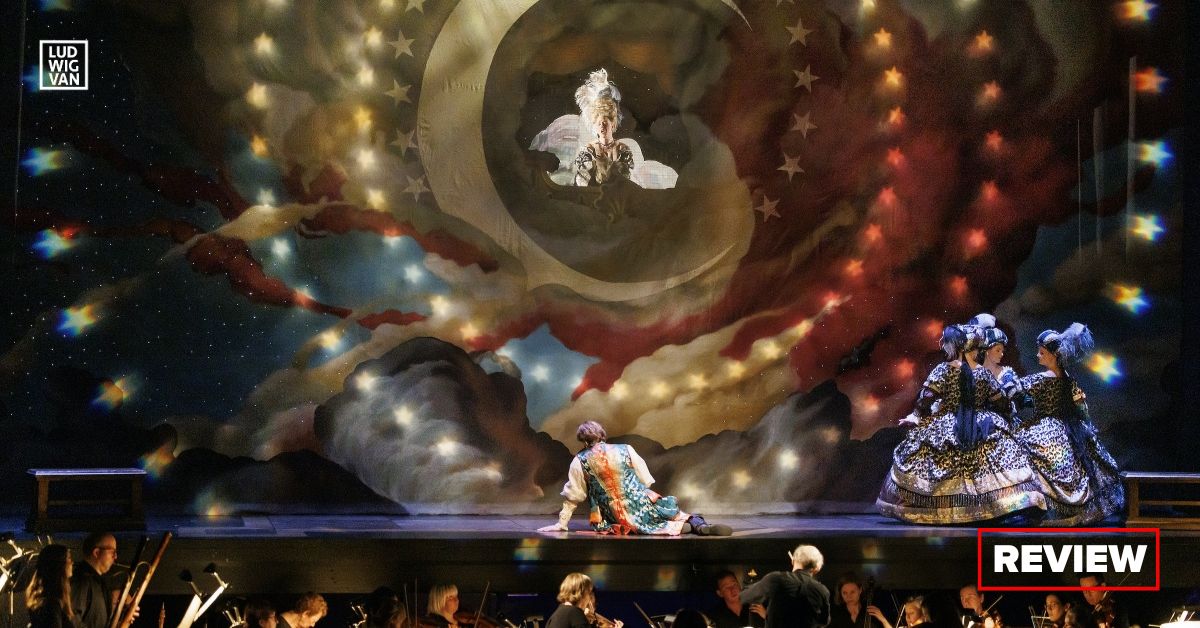
Opera Atelier: Mozart, The Magic Flute. Directed by Marshall Pynkoski, choreography by Jeannette Lajeunesse-Zingg, with tenor Colin Ainsworth, soprano Meghan Lindsay, bass baritone Douglas Williams, bass-baritone Stephen Hegedus, tenor Blaise Rantoaninas, and soprano Karine White, soprano Carla Huhtanen, mezzo-soprano Danielle MacMillan, mezzo-soprano Laura Pudwell, soprano Rainelle Krause, and the Nathaniel Dett Chorale. David Fallis conducts the Tafelmusik Baroque Orchestra. October 18, 2025, Elgin Theatre.
For its 40th anniversary season, Opera Atelier revives one of its most important productions that defined the company’s position in the operatic world. First performed in 1991, its production of Wolfgang Amadeus Mozart’s The Magic Flute is North America’s first and only period production of the opera.
When Mozart composed his final opera, he deliberately set it to a German libretto in the style of a singspiel, which contains spoken dialogues and dancing, to appeal to ordinary folks. The composer himself conducted its premiere in 1791, two months before his untimely death at age 35.
The opera follows Prince Tamino, who is sent by the Queen of the Night to rescue her daughter, Pamina, from the high priest Sarastro. Guided by a magic flute and joined reluctantly by the bird-catcher Papageno, Tamino discovers that Sarastro is actually a force for good. Tamino and Pamina undergo trials of silence, fire, and water to prove their worth and are united in love. Papageno also finds happiness with his soulmate Papagena. The opera ends with darkness defeated and harmony restored.

The Production
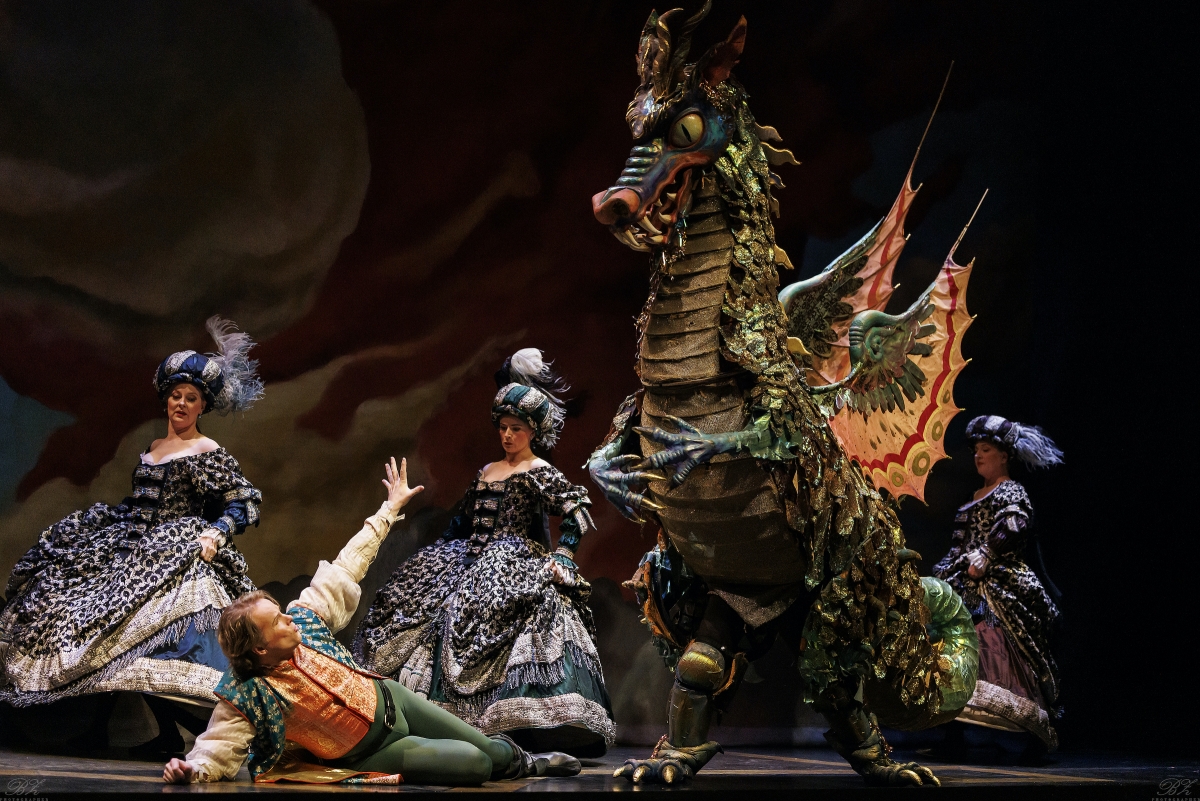
True to Mozart’s intentions, Opera Atelier makes this production accessible to audience of all ages by using Andrew Porter’s English libretto, which has many well-timed humourous elements. The whimsical sets by Gerard Gauci are straight out of a children’s fairytale storybook, transporting audiences into a magical realm of dragon, starry skies and flying creatures, along with Dora Rust D’Eye’s opulent 18th century costumes.
OA Co-Artistic Director Marshall Pynkoski says that, “this is the opera for people who think they don’t like opera.” This is perhaps because this Magic Flute feels more like a Broadway musical than a traditional opera.
The Venue
Let me just get my gripes out of the way. Although visually, the historic Elgin Theatre is an appropriate choice for a period production, the venue is mired with logistic and acoustic challenges. Some of the dialogues are not audible in the back of the theatre.
Arriving at the Elgin 20 minutes before showtime, there were long lineups along Yonge Street with patrons waiting to enter the theatre. The backlog meant ushers were going up and down the aisles with latecomers during the overture and long into the first act, with lots of commotion and “Shh!” from the audience. The distractions don’t end there— at some point during the first act, one could hear ambulance sirens amidst the actions.
The Cast
The production is anchored by a magnificent cast which excels not only in singing but also in acting. A veteran of many OA productions, Colin Ainsworth is the perfect choice for Tamino. He not only possesses an impossibly buttery and fresh tenor instrument, his diction is excellent.
Douglas Williams is charismatic as his comedic sidekick Papageno. This bass-baritone is magnetic both in voice and stage presence. The other bass-baritone, Stephen Hegedus, has a velvety voice and settles well into his role of Sarastro. Tenor Blaise Rantoanina shows great agility in both his voice and physicality, the latter especially demanded of his role as Monostatos.
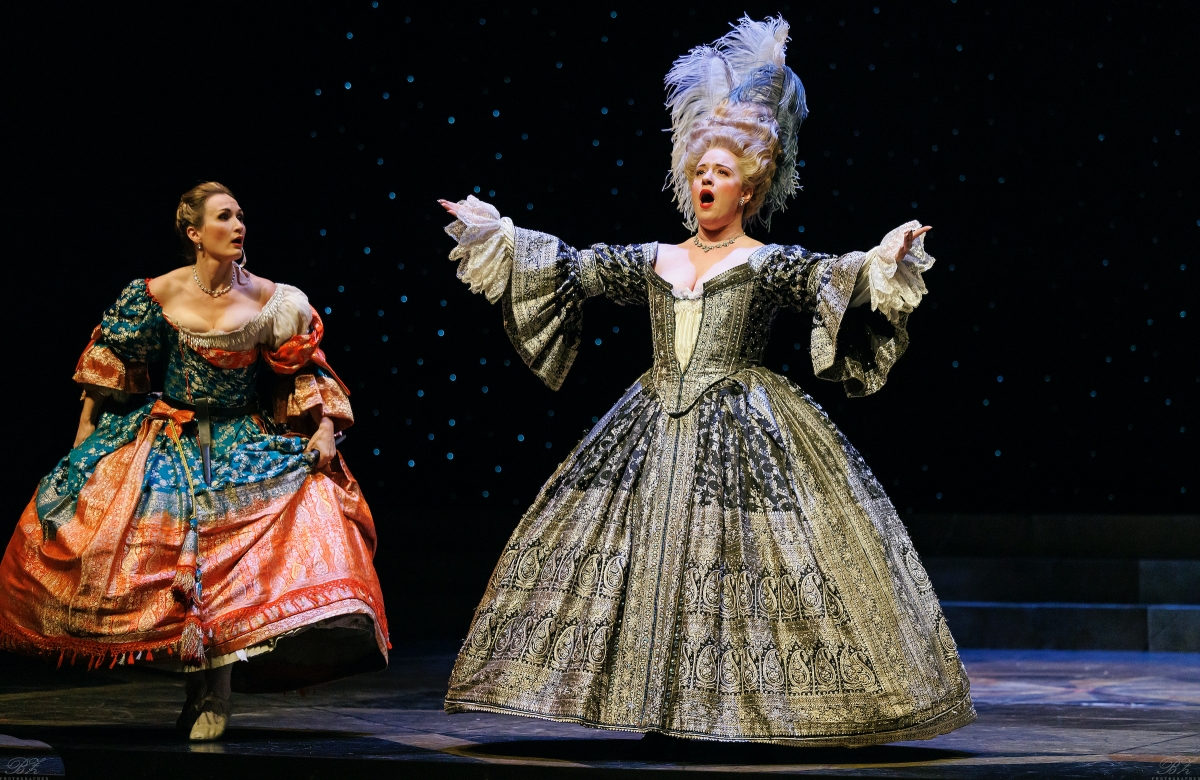
Naturally, all eyes and ears were on the Queen of the Night, and we were not disappointed. This is the signature role of soprano Rainelle Krause, one she has sung at major opera houses around the world, and which she will debut at the Metropolitan Opera later this year. She is a vocal powerhouse who nails the high F6s with natural ease. There is a surprisingly lightness to her coloratura, which sounds more angelic than fiery. After her “Der Hölle Rache kocht in meinem Herzen” received thunderous applause and cheers, she did a partial encore with even more tricky ornamentation.
There were strong performances from the other ladies of the cast. Meghan Lindsay (Pamina) delivers gorgeous lyrical lines with her full-bodied and dark-timbered soprano. Karine White is another warm and rich-sounding soprano, whose role as Papagena is unfortunately small. Carla Huhtanen, Danielle MacMillan and Laura Pudwell make a charming and hilarious trio as the Queen’s Three Ladies, sung with dazzling harmony. The Spirits, written for boy voices, are sung by another trio of sopranos — Alison Beckwith, Katie Lair and Cynthia Akemi Smithers. Their lighter voices harmonize ethereally together.

Final Thoughts
There is also good supporting singing from the chorus, made up by members of the Nathaniel Dett Chorale, both on and off-stage. The always delightful Tafelmusik Baroque Orchestra, led by David Fallis, provided delicate accompaniment on period instruments. Kudos also goes to the dancers of Atelier Ballet, choreographed by OA Co-Artistic Director Jeanette LaJeunesse Zingg.
This Magic Flute is a winning combination of vocal beauty, inventive staging and accessibility. It has stood the test of time and will remain as one of Opera Atelier’s most successful legacies.
Are you looking to promote an event? Have a news tip? Need to know the best events happening this weekend? Send us a note.
#LUDWIGVAN
Get the daily arts news straight to your inbox.