
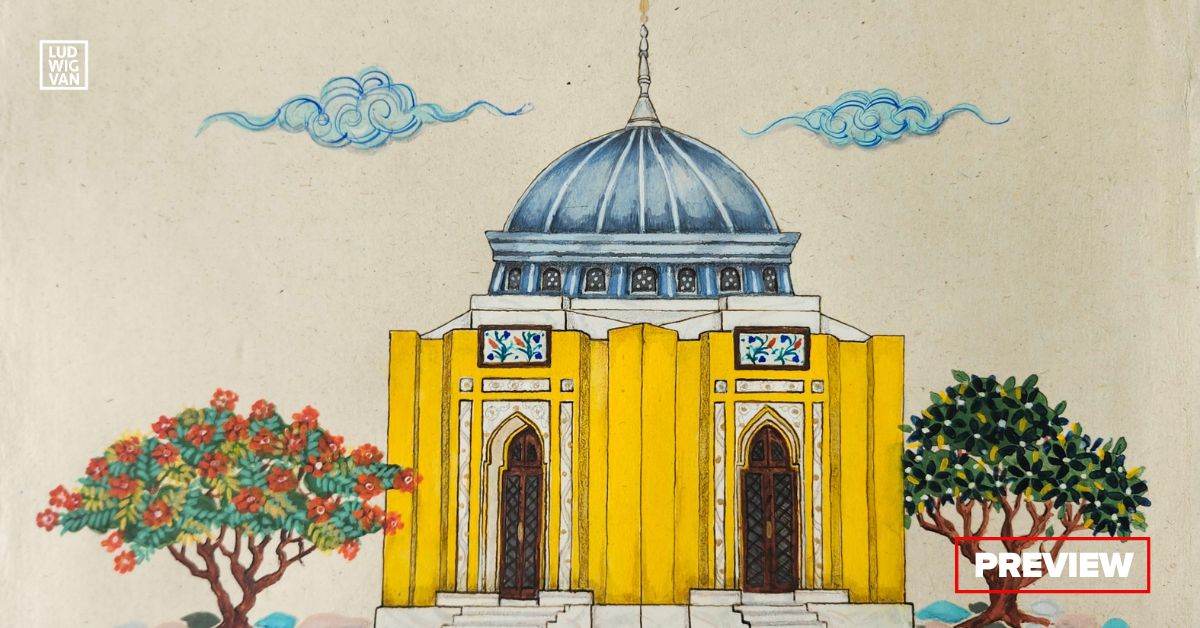
The Holcim Gallery in Milton will be hosting an exhibit by the Artist Cube (TAC), an organization showcasing Muslim visual artists across Canada. TAC, a relatively new organization, has 125 artist members already, and is growing.
The exhibition is titled Canvas of Muslim Artists: Honouring Heritage Through Art, and will be on display at the Holcim Gallery in Milton from October 7 to 26, with Opening Night on October 9. Look for art talks and tours through the exhibit as well as workshops, along with the Opening Night reception.
The show includes works by both established and emerging Muslim artists taking their place within Canada’s complex cultural mashup. Two of the artists represent the range of experience and background on display in the exhibition.
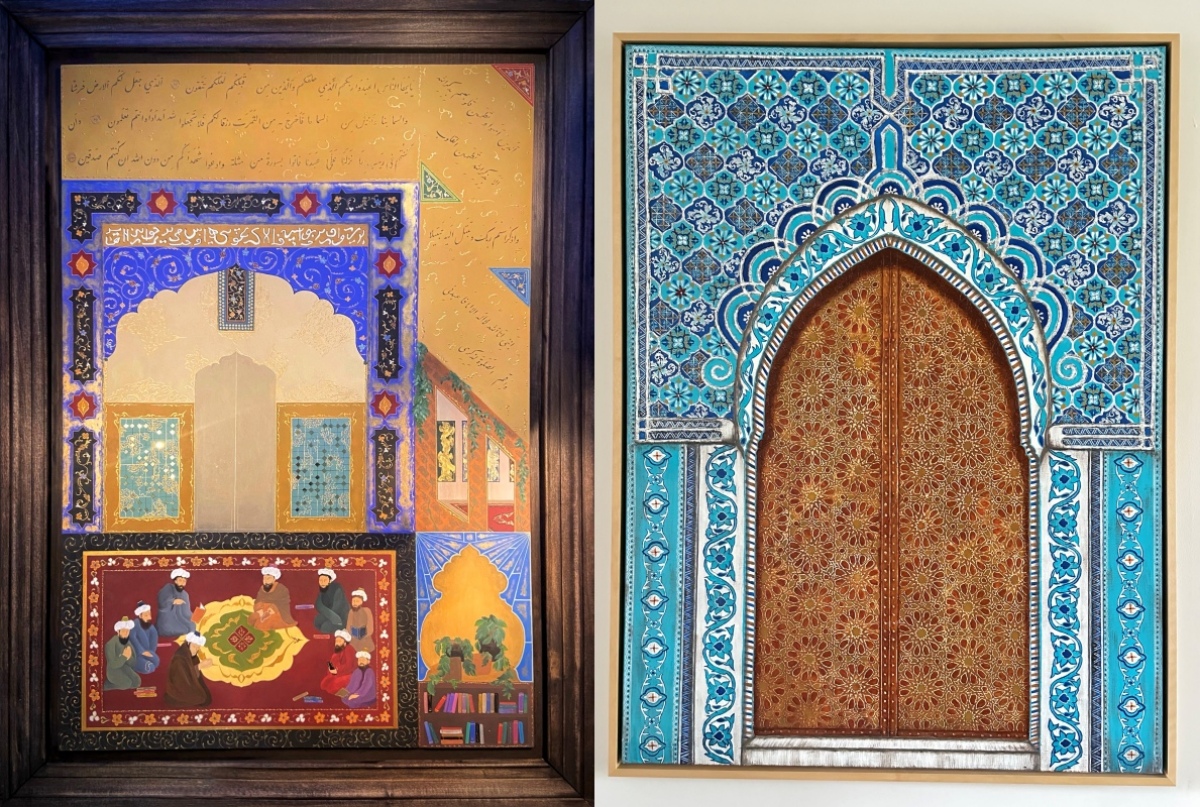
Visual artist, calligrapher, and painter Sasan Salaseli was born in Iran in 1971. He holds a Bachelor’s degree in painting, and a certification in Persian calligraphy, which he studied with masters. His artistic practice blends classical Persian calligraphy and contemporary visual art. He’s presented his work in both solo and group exhibitions across Iran and internationally, including exhibitions in Bahrain and Qatar, as well as charity auctions in London and Tehran
Emerging multidisciplinary artist Asma Sahar is inspired by Islamic traditions and histories. She has earned a Bachelor’s degree in Fine Arts, and has developed creative work that incorporates influences from landscapes, architecture, and calligraphy. Her pieces are often infused with the grand aesthetic of the Mughal era (1526 to 1857) of South Asian history, characterized by symmetry and patterning, ornamentation, and rich colours.

Q&A
We asked Nargis Naqvi, a mixed media artist and the Executive Director and co- founder of TAC, a few questions about the exhibit, and Muslim art in Canada.
The Muslim world incorporates a wide range of cultures across many different countries. Is there a certain element or quality or approach that you would say is common in Muslim visual art?
While Muslim art spans many regions and cultural traditions, from the Far East and Middle East to South Asia, Andalusia and North Africa, there are common yet unique elements that tie it together. A deep sense of spirituality, an emphasis on harmony and balance, and a pursuit of beauty that elevates the everyday are common qualities. You see this expressed through geometry, calligraphy, arabesque patterns, and symbolic motifs that transcend language and geography.
What’s remarkable is that Muslim art has always been both diverse and unified; it reflects local influences while still holding onto shared values of reflection, reverence of God, and creativity rooted in faith.
Muslim Artists are not limited to these styles. They create landscapes, figurative art and are fascinated with many elements like any artist. What differentiates them is the consciousness of the guidelines that define what is permissible and what is not. Examples of that would be not making faces with features, being vague in human or animal shapes and not depicting humans as sexual objects. Some stay away from such themes to avoid getting carried away and stick to safer things like nature or calligraphy or even abstract art.
What role can artists play in preserving heritage?
Artists are the storytellers of their communities. They preserve heritage not only by documenting traditions but also by reinterpreting them in ways that connect to the present.
In visual art, heritage can be safeguarded through motifs, symbols, and narratives using textures, patterns and landscapes that tell their own stories and might otherwise be lost in fast-paced societies. In Canada, where communities are dispersed across such a vast land, art can act as an anchor, a way of saying, “This is who we are, and this is where we come from.” It becomes a visible reminder of identity, history, and belonging.
At The Artist Cube, we aim to start those conversations, not only between Muslim and non-Muslim artists, but also within the Muslims of different cultures and heritage who might not know about the other’s way of life before they or their families moved to Canada.
How does that role change in the diaspora, in a non-Muslim country like Canada?
In the diaspora, art doesn’t only preserve heritage — it also educates and builds bridges. Many people in Canada may not have direct exposure to Muslim cultures, or might lump them with other minorities that look the same.
Some of the artists have experienced that and felt that their voice got lost in a large pile of minorities who were not exactly like them. Art allows such encounters in meaningful, accessible ways. It sparks curiosity, fosters dialogue, and counters stereotypes by presenting authentic narratives.
For Muslims in the diaspora, creating and sharing art also becomes an act of self-affirmation. It allows them to celebrate their identity proudly, while also inviting others into that celebration. Platforms like The Artist Cube provide the space where these voices can be amplified, where Muslim heritage is not just preserved but shared as part of Canada’s diverse cultural fabric. Many feel that Canada is their heritage now or their children’ heritage and might incorporate that into their art as well.
What do you want people to take away from viewing the work in the exhibition?
We want people to walk away with a sense of wonder, connection, and respect. An understanding of the difference, yet similarity, in Muslim art with other artworks they are exposed to.
Muslim art is not just decorative, it carries stories, memories, and philosophies that speak to universal human experiences. Whether someone is Muslim or not, I want them to feel that resonance. I want them to see that Muslim artists are not confined to one narrative, but are part of a vibrant, evolving tradition that continues to inspire.
Through The Artist Cube, we hope viewers come to appreciate Muslim art as part of the broader Canadian story, a reminder that heritage and creativity are bridges that connect us all and that Muslims want people to show an interest, ask questions and realize that every culture is different and how they practice their faith along with how they depict their heritage is different, even if they are all Muslims.
- Find out more about TAC and their artists [HERE].
- Find details on the Holcim Gallery at First Ontario Arts Centre Milton [HERE].
Are you looking to promote an event? Have a news tip? Need to know the best events happening this weekend? Send us a note.
#LUDWIGVAN
Get the daily arts news straight to your inbox.