
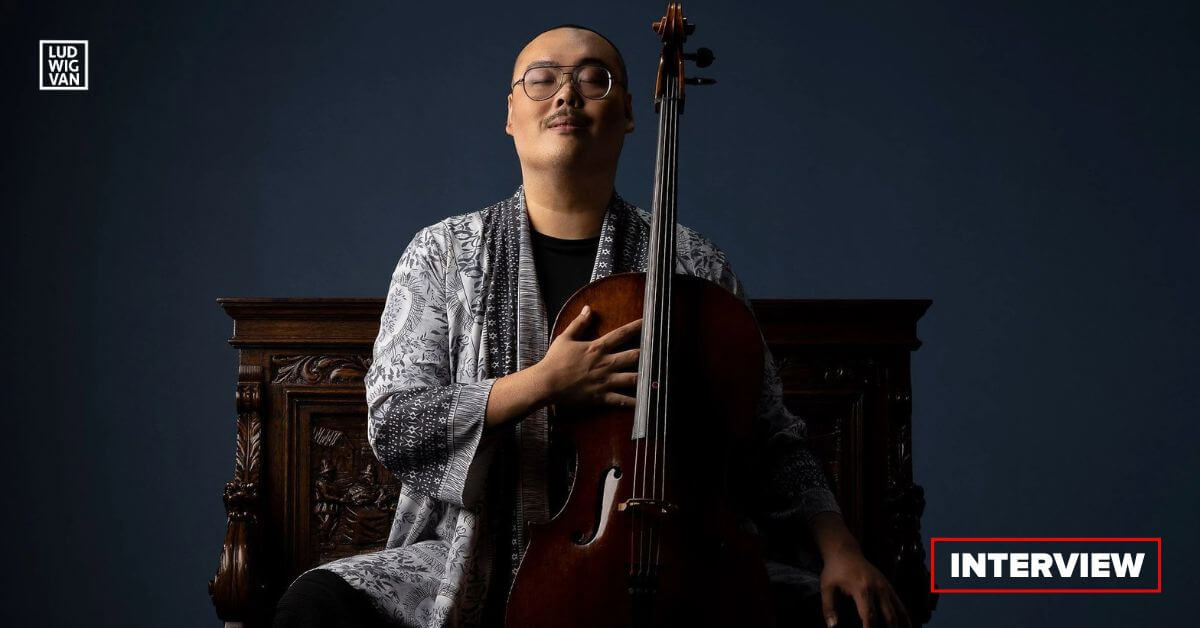
From Belgium back to Toronto, cellist Daniel Hamin Go turned to music in the wake of a tragedy. The result is an atmospheric album about love, loss, and survival.
Go’s debut album is titled Arirang. For it, he’s curated eight works that stretch across six centuries and the globe — united by themes with universal dimensions. Among familiar and less familiar composers from Marin Marais to Caroline Shaw, Go has commissioned two works by Canadian composers Iman Habibi (Iranian-Canadian) and Anna Pidgorna (Ukrainian-Canadian).
The album was recorded at the Isabel Bader Centre and CBC’s Glenn Gould Studio with producer Martha de Francisco, and along with Go on cello, the album features the performances of Benjamin Smith on piano, Jonathan Stuchbery on the theorbo, The Gil Ensemble, and Yemel Philharmonic Society.
The album’s journey begins with Arirang for Cello & Piano, a track that was released on August 15 in recognition of the 80th Liberation Day of Korea.
Arirang — Echoes of Liberation | Korean Folk Song (광복 80주년 기념 연주):

Arirang is a Korean folk song, one that expresses a gamut of emotions from pure delight to lamentation.
Korea’s 80th Liberation Day inspired the central themes of the album. Those themes have a universal scope, with a core of preserving our humanity, something that becomes even more important in times of war and oppression.
The album will be released in full on Orchid Classics on September 26, with additional advance singles that will likewise mark significant dates:
- September 2: 80th anniversary of the end of WWII — Grief Cycles by Anna Pidgorna
- September 16: Mahsa Amini‘s birthday (honouring the Woman, Life, Freedom movement) — Blood Moon by Iman Habibi
On October 6, to mark the Korean Thanksgiving, the music video for Echoes of Arirang, the title track, will be released.
It’s part of Go’s wish to combine his music with message and meaning.
Daniel Hamin Go
Daniel first picked up a cello at age 12, and as he pulled the bow across the open C, he felt the instrument’s resonance throughout his body. Today, Daniel performs on a performs on a cello made by Antonio & Rafaelle Gagliano, Naples ca. 1830, generously on loan by CANIMEX INC., from Drummondville (Quebec), Canada.
His background in music spans five countries, six institutions, and two continents, including studying as a Rebanks Family Fellowship at Toronto’s Royal Conservatory of Music, and;
- Artist-in-Residence at the Queen Elisabeth Music Chapel in the UK;
- AdDip at the Royal Academy of Music in the UK;
- MMus at the Hochschule für Musik Hanns Eisler in Berlin;
- BMus at the Manhattan School of Music.
He’s performed in Europe and North America, including at the Berliner Philharmonie, Cadogan, Carnegie Hall, Flagey Studios, and Konzerthaus Berlin.

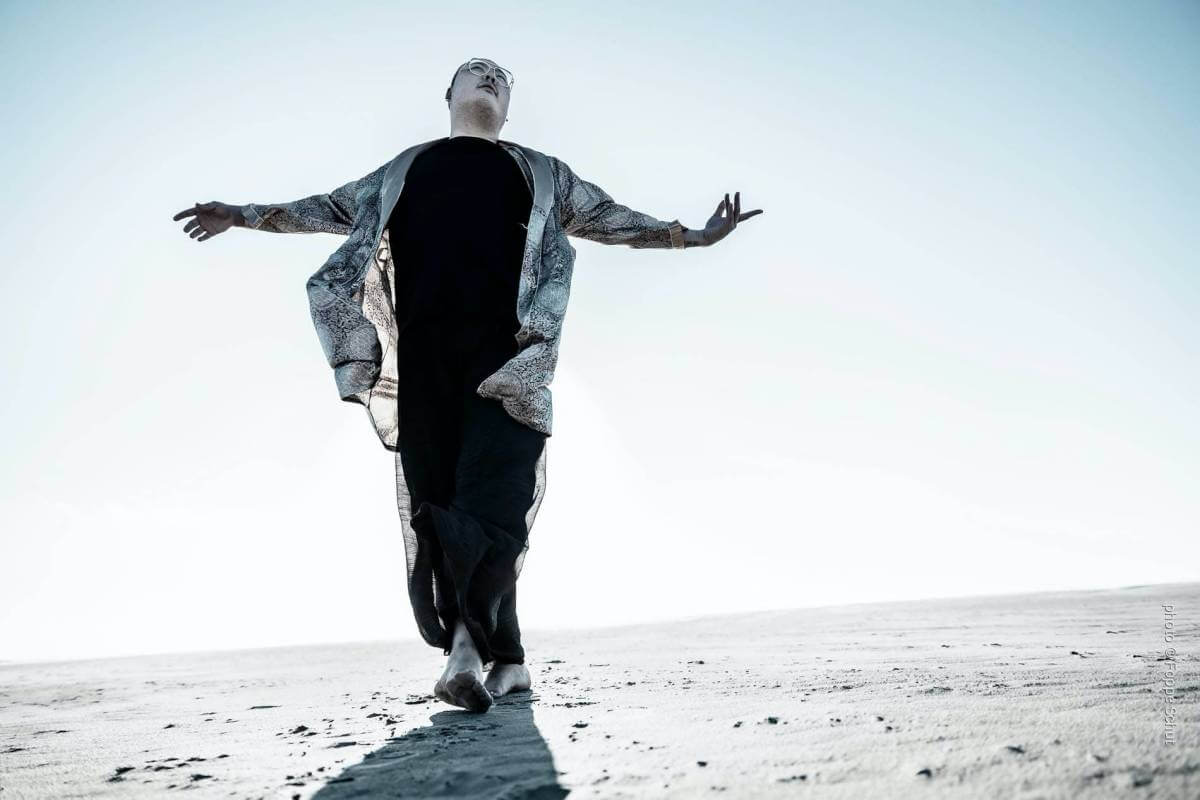
Daniel Hamin Go: The Interview
Daniel has been a frequent performer in various ensembles in Toronto and at area festivals. But, the cellist and composer was in the UK when the genesis of the album really began as a series of setbacks.
“In 2021, April, I was living in London, England at the time,” he recalls. He got a call from his sister, who was living in Toronto with their parents. All he could hear was beeping, and turmoil in the background.
“I heard my father dying on the phone,” he says. His father had fallen ill with COVID.
Go had intended on completing a residency in Belgium, but a few months into that residency, there were issues, including lack of financial support
“It was one of the greatest experiences that I’d had, and I had to give it up,” he says. The loss didn’t come easily. “I was very angry.”
He returned to Toronto, to his mother and the apartment where he’d lived with his family. It drew him closer to his mother and her own story, including that of her grandmother growing up in Korea during the Japanese occupation, and around the time it became a divided state.
His maternal grandmother grew up during the period of Japanese occupation in Korea (1910 until 1945). “She was forbidden to learn Korean,” Daniel says. “She was orphaned by the age of seven.” of seven.” His maternal grandfather came south from what is now North Korea – days after arriving, the war broke out, and the borders remained shut forever.
His father was born when his paternal grandmother was 18, and she had to leave him in the care of his older brother so she could scrounge for food.
Daniel began to understand how the trauma had been passed down the generations.
“It was a combination of trauma that I had lived through in my life, because of the trauma of my family,” he says.
It led to a change of perspective. This realization came after moving back to Toronto, and recognizing that the state of the world — that the pain wasn’t just internal. It was echoing across the world. “I said, wait a second, I’m not alone.”
Along with family history, there is enough trauma going on in the real world to overwhelm any individual. It led him to research and study the work of composers who dealt with those concepts.
“My message went from I’m angry, and I want justice, to but we need to accept this — but as artists,” he explains.
“I need to find a way to challenge this as an artist.”
The Music
His research led him to an array of Western composers from the early 1700s to the present.
“I’m a big believer that right now, in the state of where classical music is — cultural importance, relevance — I wanted this album to include as many people as possible,” he says. “For every single piece I’ve curated a narrative, a story.”
He says, listened to in sequence, each track has a kind of hook point to the next. Go begins with Marais and the Baroque because of the era’s purity.
“Everything had to be beautiful,” he says. Even grief. “In this piece, there are so many dissonances,” he adds. But, you have to listen carefully as the overtones clash and then resolve themselves.
“The 600 year-old music really is the Arirang, the folk song,” he explains. There are many versions of the song, and the earliest record of it dates back to the mid-1300s or so during the Joseon dynasty.
“There are thousands of variations,” he says. As he explains, the struggles of the mountainous region are different than those of the lowlands. And so, the song adapted. The melodies vary according to region.
“This is the so-called best known version,” he says.
The track was expensive. Go participated in commissioning the work, and he commissioned several arrangements of the centuries-old song. It was only a month before the recording session he’d already booked that he finally came upon the one he wanted. The final version was created by Go in collaboration with two other arrangers located halfway across the world.
Canadian Commissions: Pidgorna and Habibi
“When the escalation of war took place in 2022, I had a classmate at a time who travelled back and forth to teach in Ukraine,” Go says. That friend would find themselves stuck in Ukraine for months due to the fighting.
“The history of the Ukraine, and the history of Korea, […] we share very similar histories,” he notes. “You have to be very careful with choosing repertoire. I had to be very careful that I’m not using other people’s culture — I’m not using their pain.”
Anna Pidgorna’s commissioned piece Grief Cycles is a series of variations on another old folk song, Plyve Kacha Po Tysyni, or A Duckling Swims In The Tysyni, which has become an anthem for war protesters in Ukraine.
Iman’s piece Bood Moon was inspired by the death of Mahsa Amini three years ago. The young Kurdish woman was killed by Iranian police for not wearing her hijab correctly. The murder sparked public outrage, and a large protest movement in Iran called Woman Life Freedom.
“At the moment, I only have two female family members,” Daniel points out, being his mother and sister. “I think that if we really talk about oppression and justice […] I don’t think that fight should ever stop,” he adds.
“Nothing is ours to claim anymore, unless we’re actively fighting to make it better.”
Music and activism go hand in hand.
“In the midst of all this war, I need to do something for my mother, my sister.”
Recording The Album
Go had assembled fellow musicians Ben Smith, a pianist, and Jonathan Stuchbery for theorbo for the album. Yemel Philharmonic Society is an amateur Korean-Canadian choir. They began with 14 members for the recording date.
“Until a day before the recording session, me and my friend who is the director of Yemel choir, which is a Korean choir based in Toronto, we were writing to everyone we could think of to please come and spare us three hours,” he laughs.
They ended up with about 40 choir members in the end.
The Gil Ensemble is Go’s creation, an ensemble largely made up of students from either the Glenn Gould School or the University of Toronto.
“They all just came and did this for pennies,” he said. The financial aspect is not one he’s happy about. “I was profusely apologetic.” He also supplied catering, beer and wine for the recording session.
“The Gil — actually, in Korean, gil means the way or the path. It also happens to be the second character of my father’s name,” he explains.
Blending his Korean heritage into Western art music is a way forward that respects both traditions.
“It’s the younger generation of classical musician,” he says. “We are going to show the way to a better future.”
The Album
The track list includes works and composers who inspired Daniel with their ability to turn their own difficulties and even despair into beautiful music:
- Marin Marais (1656-1728): Suite in D Major, No. 63 — Les Voix Humaines
- Caroline Shaw (b.1982): In Manus Tuas
- Ernest Bloch (1880-1959): From Jewish Life, B.54 (I Prayer)
- Anna Pidgorna (b.1985): Grief Cycles — Variations on “Plyve Kacha Po Tysyni” for Cello & Piano
- Ernest Bloch: From Jewish Life, B.54 (II Supplication)
- Iman Habibi (b.1985): Blood Moon
- Ernest Bloch: From Jewish Life, B.54 (III Jewish Song)
- Franz Schubert (1797-1828): Lob der Tränen, D.711
- Claude Debussy (1862-1918): Sonata for Cello & Piano, L. 135 (I Prologue, II Sérénade, III Finale)
- Taran Plamondon (b.1995) & Daniel Hamin Go (b.1996): Echoes of Arirang — Album Version
Find the album for sale after September 26 [HERE].
Are you looking to promote an event? Have a news tip? Need to know the best events happening this weekend? Send us a note.
#LUDWIGVAN
Get the daily arts news straight to your inbox.