
The BigLake Festival returns to Prince Edward County later this month with a diverse lineup of artists and venues. The theme of this year’s Festival is “hidden gems”.
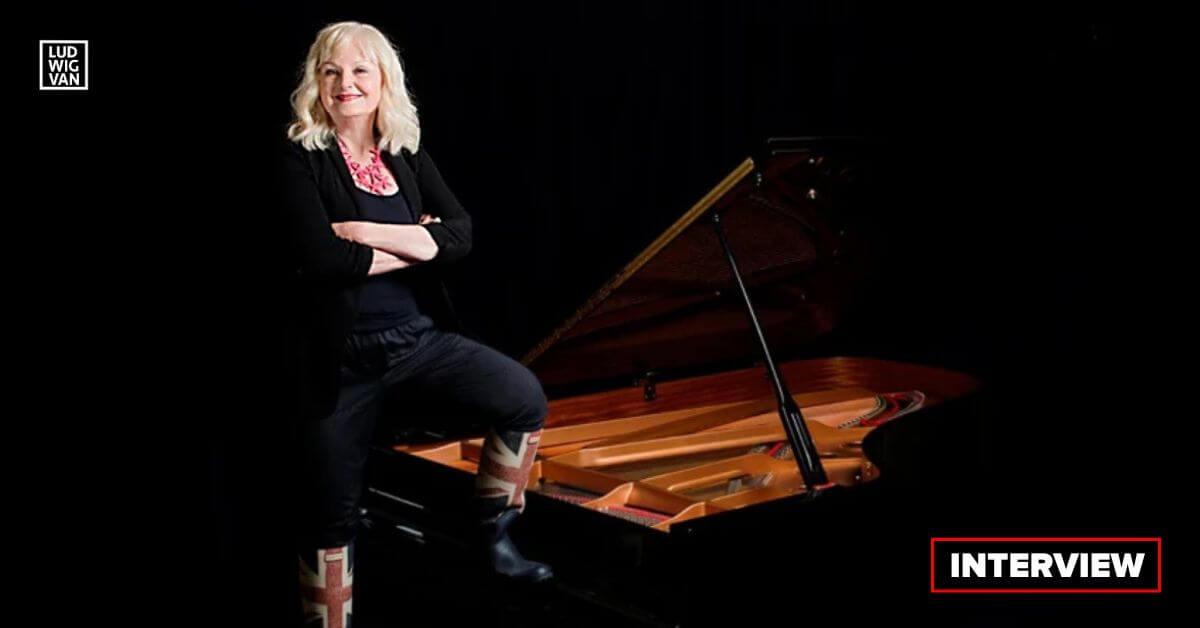
The Festival kicks off on August 15 with a performance by Canadian pianist Christina Petrowska Quilico. She’ll be playing a selection of short pieces, true hidden gems of the classical piano repertoire.
Quilico is making a return to the Festival. “It was such a lovely experience,” she says of her first appearance there in 2022. Christina relates how she was invited back by Co-founder and Executive Director Elissa Lee. “She had an idea about hidden gems, so that you kind of open a box of your old repertoire,” Quilico explains. “That was kind of the premise of it.”
We asked the award-winning pianist about the music she’s chosen for the program.
Christina Petrowska Quilico performs Ann Southam jazzy selections (Cool Blue Red Hot, 5 Shades of Blue, 3 Shades of Blue) at a York Faculty recital in 2018:

Christina Petrowska Quilico: The Interview
The program begins with composer Ilse Fromm-Michaels and her piece Langsamer Walzer, or “slow waltz”. Fromm-Michaels was born in Hamburg, Germany in 1888, and died in 1986 at the age of 97.
“She was quite the pianist,” Quilico relates. Fromm-Michaels was known to perform Rachmaninoff’s challenging Concerto No. 3, and the equally difficult works of Max Reger. “She did finger busters,” Quilico adds. “She was very much into the Rachmaninoff style.”
The Langsamer Walzer is one of the last waltzes she composed, it is believed around 1950.
“It’s full of nostalgia. I love Korngold,” she says. “It’s quirky, it’s unique. It’s not like a Chopin waltz.”
The program, in fact, began with Fromm-Michaels’ work. “I started with her.”
Three pieces by Meredith Monk follow — St. Petersburg Waltz, Paris, and Railroad (Travel Song). American composer Meredith Monk often creates multidisciplinary works that combine dance, theatre, and music. Born in 1942, she’s a multi-award winner, including the Obie Award for Lifetime Achievement.
“She’s quite unique,” Quilico says “She’s an inventive composer, certainly an icon.”
Along with her compositions, Monk is known for her work as a director, vocalist, filmmaker, and choreographer.
“She was a pioneer in extended vocal technique. She deserves credit. She had groundbreaking music,” she adds. “I picked four of her pieces.”
The St. Petersburg Waltz is a sad composition. “The harmonies are shifting. She has written instructions for performance: Dancing, gentle, forward, motion.”
Quilico cites the frequent changes of tempo in the piece. “She makes them organic.” It was written in 1994, and Christina says Monk makes the right hand sound like a balalaika, a traditional Russian stringed instrument, giving the work a folk-like dance energy.
“There are a lot of surprises.”
Paris was written in 1972. Quilico calls in a quirky piece, full of tempo changes, with a short improvisation in the middle. “It’s in a dance style from Paris,” she says, likening it to “a bit of Debussy”. “It’s got a lot of surprises.”
Railroad (Travel Song) is meant to mimic the rhythm of a train travelling down the tracks. “It’s a really neat piece. It’s got quirky rhythms. It’s very bluesy,” Quilico says “For me, this was an introduction into the blues style.”

Christina has notably recorded music of Ann Southam’s. The concert program includes her pieces 5 Shades of Blue and 3 Shades of Blue.
“She had these jazz pieces,” Quilico says. “Who would have thought that Ann Southam would be into jazz? I think they’re absolutely wonderful.” Quilico recorded both for one of her albums. “I play it, and it’s blues. She uses jazz language, the 12-bar blues structure.” Christina cites the piece’s syncopated rhyyms and improvised passages, along with a classic jazzy walking bass line
“She has a couple of wild gestures,” she adds. “It’s got a showy, virtuosic style, with a blues swing. In classical music, there’s that tension between consonance and dissonance,” she notes. “Some of them are very tricky to play. You really need to get into the style.”
It’s led to a lifelong love of the genre. “What I love about jazz players is that they’re so into the music.”
Alice Ping Yee Ho’s A Manic Ride Through Lollipop Hell rounds out the first half of the program. In September, Quilico will be recording a second volume of Ho’s music, and A Manic… will be part of that album. Christina describes it as pictures of an imagined landscape.
“She’s lots of fun to work with,” Quilico says. “She writes especially well. It’s brilliant.”
Ho describes the piece in her writing.
“It’s based on my one act horror anime opera, Labyrinth of Tears,” she writes. It’s a work she’s still in the midst of writing about the adventure and friendship between five schoolgirls from an academy of arts. “This is captured in three movements of contrasting character.” The music is a crossover between pop and classical “…and demands great technical virtuosity.”
The piece is dramatic and intense.
“It is quite something. It’s tricky,” Christina says. “Then I will have intermission, and I will need it for sure.”
Program: The Second Half
After intermission, the concert veers away from strictly classical or Western art music. Masamitsu Takahashi’s Capriccio opens the second half. “It’s jazz. It’s difficult too.”
There’s not a lot of information available about the Japanese composer, despite the fact that he’s a member of a number of organizations devoted to traditional Japanese music.
“I received the composition through some Japanese composers some years ago,” Christina says. “This one caught my fancy because of the jazz element. It’s difficult, it’s virtuosic.”
Jazz great Art Tatum’s hits I’ll Never Be the Same and Don’t Get Around Much Anymore are next in the program.
“And then we go to one of my favourites, Art Tatum,” Quilico says. “I discovered him many, many years ago. I was in my 20s, and I had been in an international piano competition.”
One of the judges reached out to her after the competition, and it began a musical friendship. “He was the one who introduced me to Art Tatum,” she says. “He played him, and I almost passed out.”
As she notes, Art Tatum was legally blind, yet played with an almost impossible speed, including a left hand with a stride beat. “It’s like having a chocolate dessert — it’s so rich and flavourful. His artistry is unbelievable.”
As a pianist steeped in the classical tradition, she was amazed by Tatum’s gift both as a performer and composer, and notes that giants of the classical world like Rachmaninoff and Vladimir Horowitz were equally incredulous at his technique.
“This to me talks about jazz. They feel the beat so strongly, but they have the freedom to play around with it.”
Christina Petrowska Quilico performs Ernesto Nazareth’s Fon Fon in recital at Hart House, University of Toronto, on July 28, 2015:

From jazz, the program ends with Brazilian Tangos by Ernesto Nazareth.
“I thought I would end with tangos,” Christina says.
She points out the differences between Argentine and Brazilian tangos; among them, that the latter incorporates a more upbeat finish, where tragedy can become optimism.
“Nazareth had a kind of tongue in cheek sense of humour.”
Quilico’s two-CD set Tangos Brasileiros – The Music of Ernesto Nazareth came out in 2013. “I did 24 tangos, it’s a two-CD set.”
To immerse herself in the flavour of the music, she took an unusual route.
“I didn’t go to a musician, I went to my dance teacher,” she says.
Nazareth had aspirations of becoming a classical pianist, but took work where he could find it, including playing piano for movies. He did compose two pieces that became hits, but had sold the rights to his publisher.
“He didn’t have the happiest life, he didn’t make much money, but he certainly wrote a lot,” she says. “He introduced Afro-Brazilian rhythms into polkas and waltzes.” Nazareth left a legacy of 211 completed works, including 88 tangos.
Quilico notes the balance in his works between a solid left hand, and the gently shifting moods produced by the right.
“Unlike the Argentine tangos that have the rubatos written in, with Nazareth, because they’re rhythm-based, the Afro-rhythms take precedence. You have to be careful they don’t become chunky. It’s a fine balance.”
The tangos finish the program with a flourish.
“I start with a dance and finish with a dance.”
- Find concert details and tickets for the August 15 opener of the BigLake Festival [HERE].
Are you looking to promote an event? Have a news tip? Need to know the best events happening this weekend? Send us a note.
#LUDWIGVAN
Get the daily arts news straight to your inbox.