
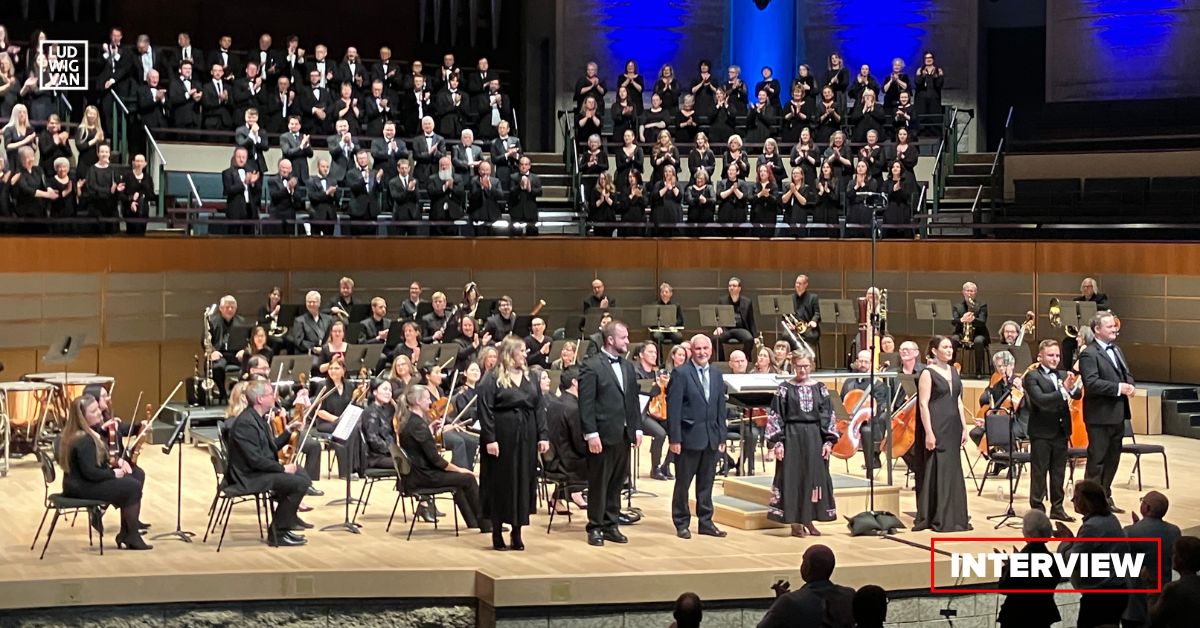
The Ukrainian Art Song Project takes place at the Royal Conservatory of Music, beginning on August 11, and ending with a concert on August 17. Since its inaugural year in 2017, the Ukrainian Art Song Summer Institute has supported 43 artists in offering an immersive dive into the genre.
For 2025, UASP’s seventh iteration, the lineup includes eight vocalists from Austria, Canada, the United States and Ukraine — Sofia Bolonna, Mezzo-soprano; Juliana Hentosz, soprano; Olivia Pryce-Digby, soprano; Catharin Carew, Mezzo-Soprano; Polina Kornyushenko, soprano; Samantha Fullerton, soprano; Lana Pastuszak, soprano; Anna Tanczak, soprano — and pianist Violetta Kurkurina, who’ll spend a week in an intensive study of the genre.
Along with the performers, Myroslav Volynsky from Lviv, Ukraine, joins the 2025 Ukrainian Art Song Summer Institute faculty as resident composer.
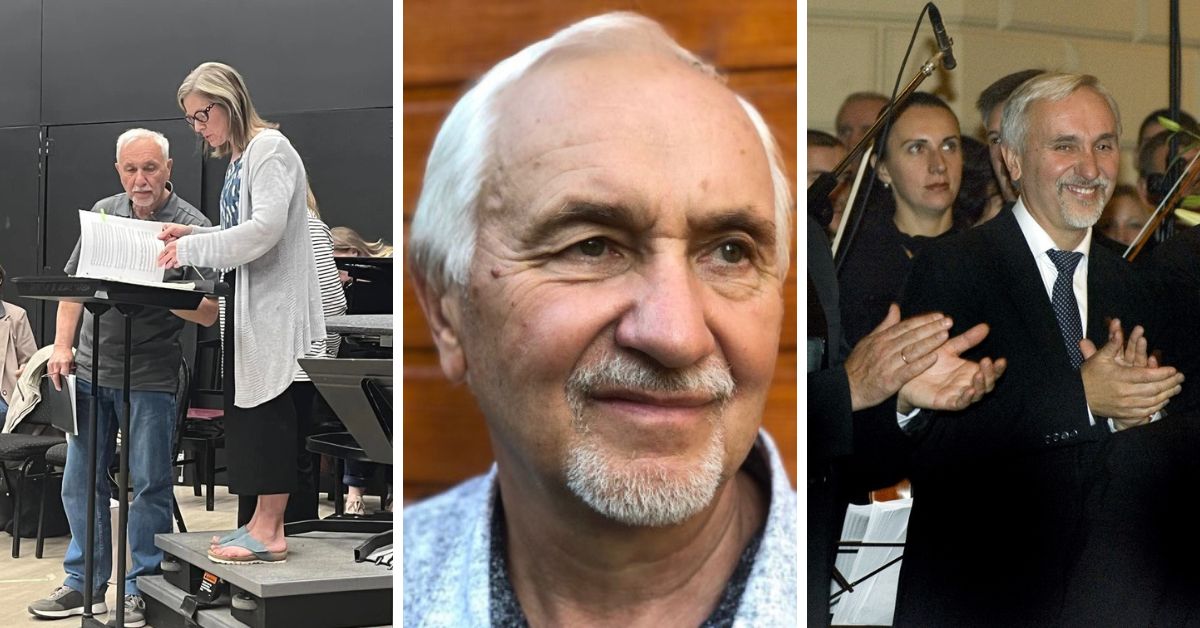
Myroslav Volynsky
Composer Myroslav Volynsky was born in the village of Pidtesovo, Krasnoyarsk Territory, and lived in Ivano-Frankivsk in western Ukraine for much of his childhood. There, he studied at and graduated from the Music and Pedagogy Faculty of the Ivano-Frankivsk Pedagogical Institute (now the University).
He went on to study in Lviv at the Mykola Lysenko Lviv State Conservatory, where he graduate with a degree in composition. In addition to his compositions, Myroslav taught composition at the Lviv Secondary Special Music Boarding School, and many of his students have gone on to competition wins and international recognition.
Volynsky has composed many larger scale works, including seven operas, three oratorios, cantatas, symphonic works, choral, vocal, chamber music, and instrumental music of various genres.
Myroslav Volynsky’s art songs have been studied and performed by many participants of the Ukrainian Art Song Summer Institutes.
LvT asked Volynsky a few questions about Ukrainian art song.
From the Ukrainian Art Song Summer Institute 2024:

Myroslav Volynsky: Q&A
LvT: How important is art song to Ukrainian culture?
MV: There is a direct connection between Ukrainian folk songs and art songs. After all, each folk song also had its own author. Some folk songs have such a complex and perfect melody and wonderful poetic text that only a very talented person could create them.
Unfortunately, the authorship of such songs was not recorded, and later they were completely forgotten. The song was passed down from mouth to mouth. However, now it has been possible to establish the authorship of some songs that until recently were considered folk. Examples are “A Cossack Travelled Across the Danube” (words and music by Semen Klymovsky), “I Look at the Sky” (words by Mykhailo Petrenko, music by Lyudmila Oleksandrova) and many others.
Some art songs are sung not only in concert halls, but also in everyday life and are considered folk. For example, “Oh, You, Girl from a Nut of a Grain” (music by Anatoly Kos-Anatolsky, words by Ivan Franko), “Oh, in the Meadow, a Red Viburnum” (words and music by Stepan Charnetsky). Today, the Ukrainian art song has become an integral part of chamber music.
LvT: Are there any special features or elements in your music that you would call uniquely Ukrainian?
MV: When creating music, I pay primary attention to the content and idea of the work. Depending on them, I use certain elements of musical expressiveness. In some works that have a folk theme, there are elements that emphasize the Ukrainian character of the music: specific modal, rhythmic, or intonation devices. For example, “A Thought about a Poor Widow and Three Sons” (words by Oleksandr Oles).
In addition to purely Ukrainian modes and intonations (the Dumy mode and the Hutsul mode), my works also contain Jewish klezmer, oriental melodies, and elements of jazz. And when I considered it necessary, I even used dodecaphony.
LvT: You have created a variety of works. What attracts you in particular about art song?
MV: I have created works in a wide variety of genres of academic music. However, my favourite genre was and remains opera. And the art song, in my understanding, is very close to opera. It is like an opera in miniature, a mono-opera, often like a psychological drama, in which in a short period of time the hero experiences a concentrated cluster of feelings: faith and disbelief, hopes and doubts.
LvT: How difficult is it to continue to do your job during the war?
MV: I think it is even more important to continue. Everyone should continue to do their job, not to retreat from their calling. Although in the first months of the war I could not write, let alone approach the piano. It seemed unacceptable to set myself any musical tasks while people were dying.
But during this terrible period, many musicians found themselves abroad. They needed works by Ukrainian composers to represent their country. And often these were groups of very different instrumental ensembles for which there was no repertoire. So little by little, my return to creativity took place, and the realization that culture, art is important, they are representatives of Ukraine in the world.
Ukrainian Art Song Summer Institute: Concert August 17
Other faculty members this year include co-director Dr. Melanie Turgeon, co-director and vocal coach Benjamin Butterfield, vocal coach Andrea Ludwig, and collaborative pianists Stephen Philcox and Dr. Leanne Regehr.
Along with the work of Volynsky, the concert program will feature songs by Mykola Lysenko, Petro Haidamaka, Ostap Nyzhankivsky, Yakiv Stepovy, Kyrylo Stetsenko, and Stefania Turkewich.
- Find concert details and tickets [HERE].
Are you looking to promote an event? Have a news tip? Need to know the best events happening this weekend? Send us a note.
#LUDWIGVAN
Get the daily arts news straight to your inbox.