
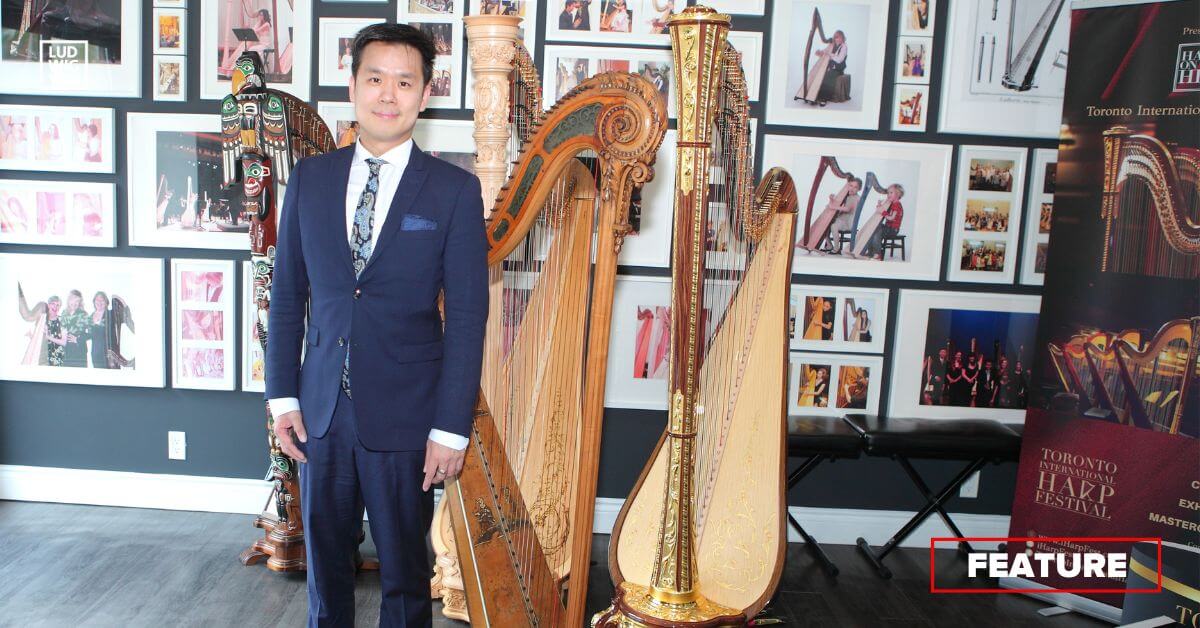
The inaugural iHarp Festival kicked off this week, offering a series of concerts and other activities to showcase the beauty of the ancient instrument. As part of the festival, a harp with a distinctive story was revealed to audiences at a weekend event.
The harp is said to be crafted by the Cousineau family, luthiers to Queen Marie Antoinette, and passed down through generations of a family.
Marie Antoinette & The Harp
Queen Marie Antoinette made the harp a fashionable instrument in French society, with ramifications that outlasted a reign cut short by revolution.
Georges Cousineau (1733-1800) and son Jacques-Georges Cousineau (1760-1836) became prominent harp makers, and musicians. Georges Cousineau was appointed as the Luthier-in-Ordinary to Queen Marie Antoinette in 1775.
The Cousineaus served in both capacities to the Queen, as musicians and harp makers, and because of her patronage, they were able to pursue innovating the instrument. Their modifications include improvements to the pedal mechanism, and more accurate tuning. Their innovations made key changes easier on the instrument.
Along with cutting edge technology, the Cousineaus crafted beautiful instruments with elegant curves and intricate carved and painted decorations. Cousineau harps can be found in global museum collections, including the Victoria and Albert Museum in London, and the Metropolitan Museum of Art in New York City.
Cousineau harps became a must-have for members of the French aristocracy, and their reputation persisted. They would go on to provided harps to Empress Josephine.
A Toronto Connection?
Is the harp a piece of history that dates back to the reign of the last queen of France?
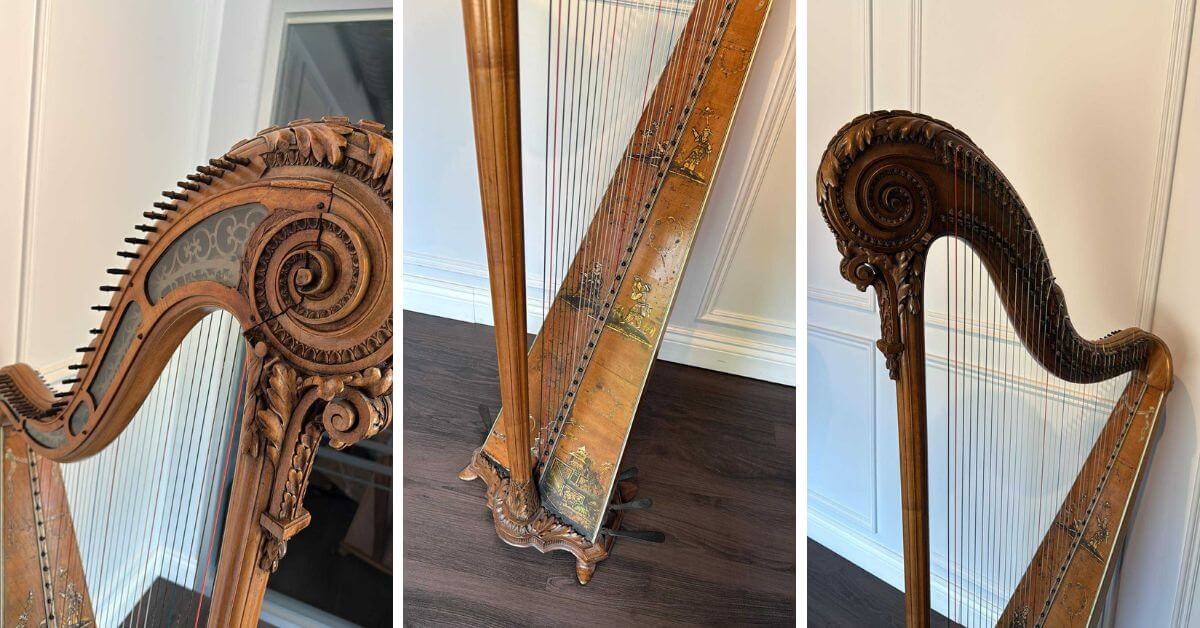
The harp in question is currently in Toronto, inherited by a family who have preserved it through the generations. Anecdotally, the instrument is said to have been given to a member of the family by the Queen in recognition of “services rendered”.
While the story is family history, specific features of the instrument support the story of its history. Most harps use a wood panel that covers the mechanisms in the neck. According to reports of the time, the Queen preferred a glass panel so she could see the instrument’s action as she played.
The decorative elements incorporate Asian and Chinoiserie motifs were popular in her day, and Marie Antoinette is known to have amassed a large collection of Asian art.
The iHarp Festival
The story and its intrigue serves as an introduction to the long history of the instrument and its capabilities.
The earliest harps, thought to have evolved from the hunter’s bow, date back to the ancient Sumerian civilization of about 3500 BCE.
Today, many contemporary composers are turning to the harp to express their musical creations.
The iHarp Festival aims to showcase both the instrument’s history and its future.
- Find details about the concerts and events at the Festival [HERE].
Are you looking to promote an event? Have a news tip? Need to know the best events happening this weekend? Send us a note.
#LUDWIGVAN
Get the daily arts news straight to your inbox.