
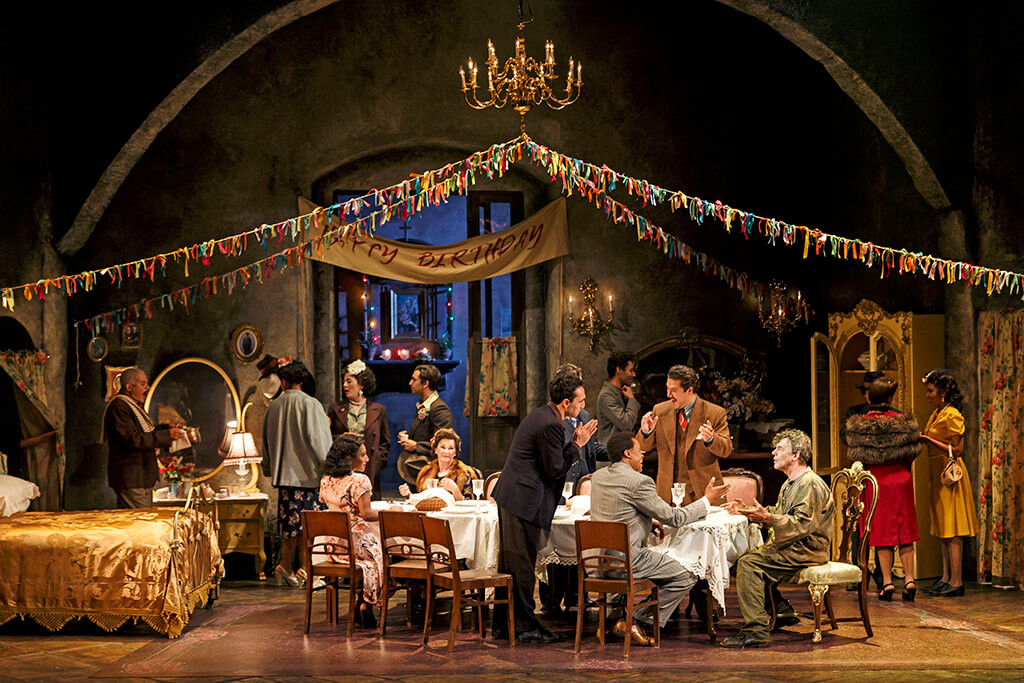
Stratford Festival 2018: Napoli Milionaria! by Eduardo De Filippo, translated by John Murrell, directed by Antoni Cimolino, Avon Theatre, Aug. 2 to Oct. 27. Tickets available at 1-800-567-1600 or www.stratfordfestival.ca
Most playwrights want their work to transcend the plane of mere entertainment to provide a meaningful theatrical experience. The ancient Greeks believed that theatre held religious significance, and that the tragedies of Sophocles and Euripides would bring about catharsis in the audience. In contemporary terms, a playwright hopes that the theatrical experience will teach us something about the world, or about ourselves. Legendary Italian playwright Eduardo De Filippo (1900-1984) certainly held that view when penning his famous plays about his beloved Naples. With Napoli Milionaria! (1945), he took direct aim at the corrupting effects of war on his fellow citizens. The current Stratford Festival production features a new translation by distinguished Canadian playwright John Murrell, but the heart of Napoli Milionaria! still remains De Filippo and his fervent message. War can rot the soul.
I did learn something about myself when watching Napoli Milionaria!, and I’m not happy about it. I discovered that Trump’s America to the south of us, and the growing populism in our own country, has put such a cynical edge on my worldview that sentimentalism seems simplistic, dated and jejune — and just think, the hard-edged person that I am now once shed copious tears when the lepers were cured in Ben-Hur. Napoli Milionaria! wears its heart on its sleeve, and is guaranteed to tug at the heartstrings. Depending on a person’s mindset, some in the audience will be deeply moved by the play, or, at the extreme other end, embarrassed by its obviousness and predictability.
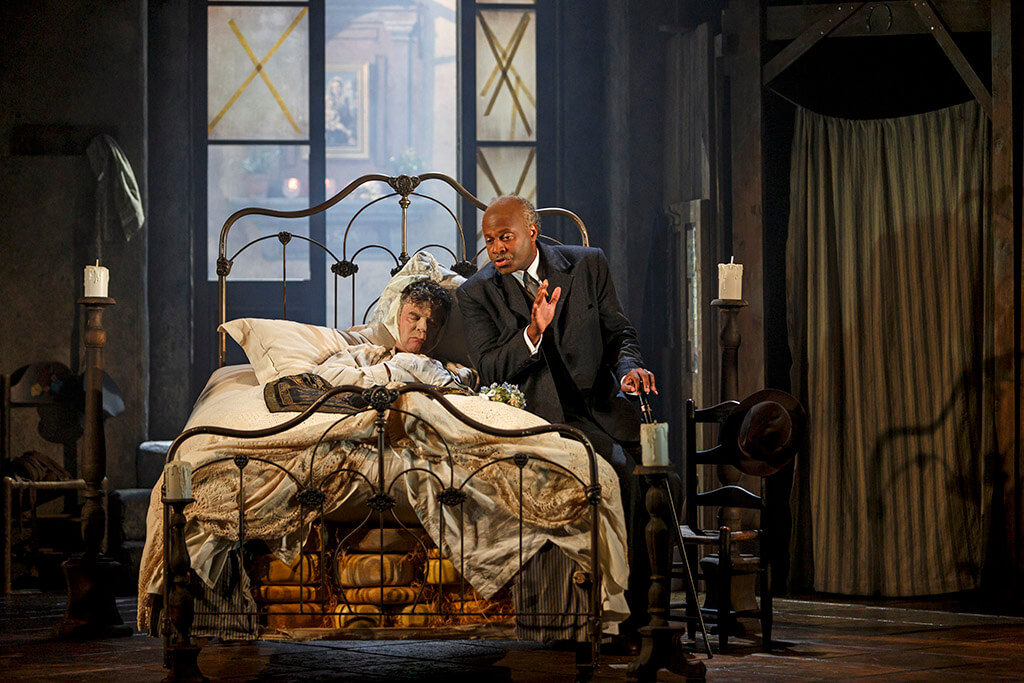
De Filippo’s focus is the shifting fortunes of a poor Neapolitan family during wartime. Father Gennaro (Tom McCamus), a streetcar driver, has been laid off work. We also learn that his experiences as a soldier in World War I have left him emotionally damaged. Because Gennaro has abdicated taking responsibility for the well-being of the family, mother Amalia (Brigit Wilson) ekes out a living on the black market in partnership with family friend Errico (Michael Blake). Son Amedeo (Johnathan Sousa) works at a garage, while daughter Maria Rosaria (Shruti Kothari) helps her mother in her business. Secondary characters, who all play a role in bringing out De Filippo’s themes and variations, include close neighbour Adelaide Schiano (Chick Reid) and her niece Assunta (Alexandra Lainfiesta), Amedeo’s friend Peppe “The Jack” (Emilio Vieira), handyman Altar Boy (David Collins), and especially, black market customer and Amalia’s victim, Riccardo Spasiano (Tom Rooney), and policeman Brigadiere Ciappa (André Sills).
The first act takes place early in the war when Mussolini’s fascist government is still in place, and Gennaro’s family is struggling to exist amid food shortages and wide-spread corruption. In the second and third acts, the Allies now occupy Naples, and the family fortunes have risen sharply for the better. Under Amalia’s relentless business drive, they have now joined the ranks of the corrupt and the moneyed class. Throughout these changes, Gennaro is the leitmotif. He is also, apparently, the only incorruptible man in all of Naples. He is our eyes and ears to the devastation war can bring about emotionally and materially. He is the wandering philosopher who knows all, but is cursed, like Cassandra in the Wilderness, to have no one heed his warnings. Gennaro is our moral and social conscience, and McCamus is simply superb. He gives a performance of a lifetime. In fact, the entire ensemble shines in bringing Filippo’s Naples to life (although the always wonderful Rooney, as the hapless Riccardo, does lose words when he lowers his voice). I was particularly taken by Sills’ portrayal as the worldly-wise Brigadiere. What a compelling actor he is in this play.
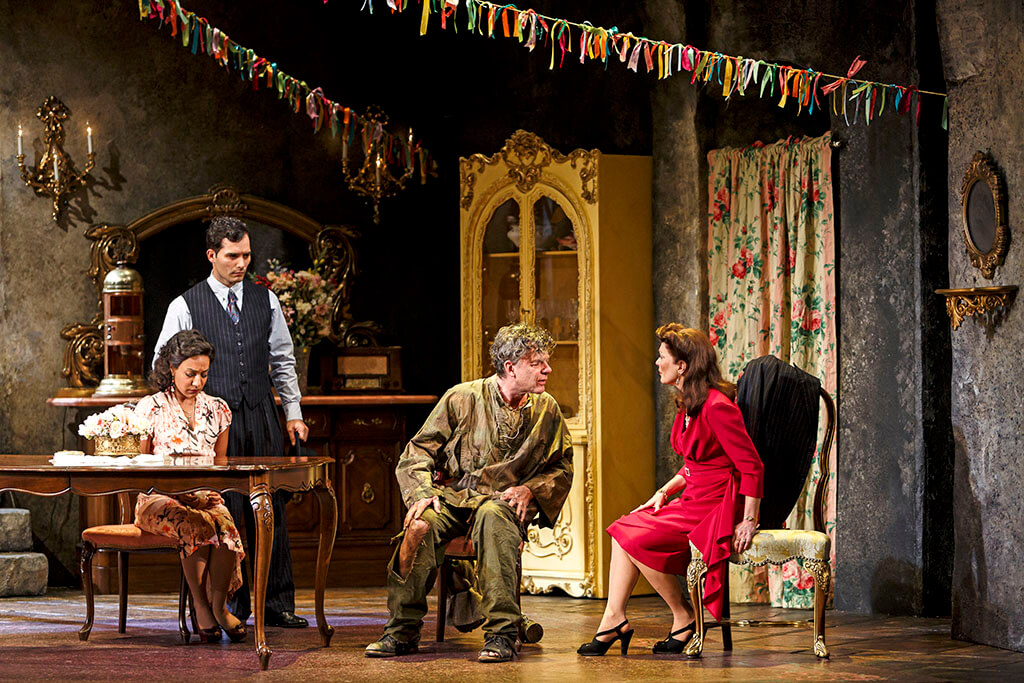
Director Antoni Cimolino could up the pace in the second act, which drags a bit, but he and his cast do capture, overall, the ebullient spirit of Naples. The play is not without its funny moments, and Cimolino makes sure the De Filippo’s all-important comedic bent is not eclipsed by the more serious nature of the writing. Particularly effective, on the part of the direction, is the constant parade of people passing the family’s front door, independent of the interior drama, that reminds us of the vibrant life of this iconic city. Julie Fox’s set and costumes are a period marvel. Naples in the 1940s lives and breathes on the Avon Theatre stage.
Napoli Milionaria! is a fine production. I just wish that I could have appreciated the sentiments of the author on a more profound level.