
At 19, the Pacifica Quartet has not just come of age; it has emerged as one of the great chamber ensembles of our time and has just released the third in a series of albums surveying the quartets of Dmitri Shostakovich and his Soviet peers. Its members are at Toronto Summer Music, sharing their wisdom with the festival academy’s fellows this week.
What has been happening behind studio and classroom doors gets flung into public view on Friday, with an open rehearsal in the afternoon, and evening concert as well as “Mentors and Fellows” concerts at Walter Hall on Saturday.
For some of these concerts, the Pacificas are being joined by a fellow American, clarinetist Alexander Fiterstein, who comes with an equally fine pedigree and shares the string players’ love for mixing up repertoire.
Both the Pacifica and Fiterstein have made a point of commissioning new music since the start of their professional careers.
Premiering new works is, “a vital part of musicmaking,” and of being sure “you’re connected to today,” says Pacifica Quartet violist Masumi Per Rostad. “It gives us better perspective and informs our work with composers who are not alive.”
Rostad explains how, for many students, approaching a 200-year-old piece of music for the first time is a “cold” experience. “But as you start working with living composers, you realise that there is this give-and-take, this ability to make mistakes and have different perspectives that change. It livens the process a lot.”
The violist jokes about how the ensemble has sometimes had to keep composers at arm’s length because of their tendency to fuss with their work.
A dead composer, on the other hand, is always a welcome guest. It may sound strange, but long-gone creators really do come to life in the middle of a large project, such as the Pacifica’s Shostakovich recording cycle.
I suggest that he may become like a fifth member of the quartet. “And also like a coach,” adds Rostad.
“It’s like he’s our teacher and he’s saying think about this – because of the problems and issues that arise in the process of interpretation and that we have to work through. It’s like this kind of all-seeing outside perspective yet inside the group. It’s someone who understands us and knows what we’re going through and guides us through the process.
“It’s really kind of an interesting relationship that we have with the composer,” Rostad continues. “I think the more that you play of a specific composer, you get a better understanding of the timing, of the thinking, of their internal rhythm and maybe perspective even.”
Rostad says he and his quartet mates are keen to share these insights with the festival fellows this week.
“This is one of the more interesting things we’ve done, in terms of how it’s set up,” says the violist of the academy, which places each visitor with a small group of young musicians on the verge of professional careers.
“It’s like the Marlboro Music Festival [in Vermont], where you have pre-professionals playing with professionals,” says Rostad. “It’s very exciting, a little more of a lively experience.”
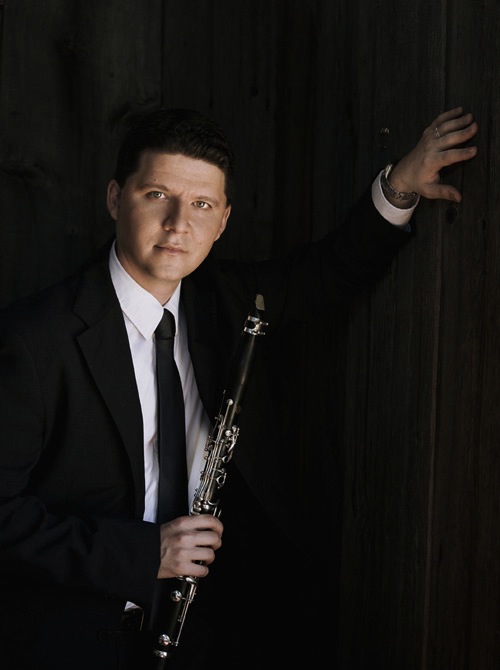
Clarinetist Fiterstein, who is not teaching in Toronto but participating in several concerts, is as adept as the Pacificas in mixing up musical styles, adding Klezmer to his mix. He has also been seeking out new Klezmer arrangements that blend clarinet and strings.
“Audiences are always very responsive to it,” says Fiterstein. “It’s very easy to like.”
That said, Fiterstein has the deepest respect for the core repertoire — especially the Mozart Clarinet Quintet, which he will perform with the Pacificas on Friday night at Walter Hall.
The rest of Friday’s programme is equally impressive, featuring an inspired pairing of works separated by a century: Joseph Haydn’s “Sunrise” Quartet and Maurice Ravel’s great String Quartet from 1904.
Like Fiterstein, Rostad is keen to bring new audiences into the chamber music fold. But experience has also taught him that chamber music is especially suited to the veteran listener.
“I’m not worried about the age of our audiences,” Rostad explains. “It’s not a new topic that audiences are older for chamber music; it’s because people tend to go to orchestras first, because it’s probably a bit more accessible for the new listener.
“As you get more experienced as a listener and as a concertgoer, you start to develop the skills and the willingness to expose yourself and immerse yourself into that more intimate dialogue that’s happening on stage.”
It’s that dialogue that sustains everything. “Live performance is so important because there’s something that happens no matter where you are – in space, with everyone in the room,” says Rostad. “You feed off the audience and vice versa. It’s kind of like a cyclical experience that goes back and forth.”
+++
Thursday: Fiterstein joins the Los Angeles Guitar Quartet in an informal Shuffle concert at Heliconian Hall at 5 p.m.
Friday: Fiterstein and the Pacifica Quartet present an open rehearsal at Walter Hall at 4 p.m., with the formal concert set for 7:30 p.m.
Saturday: Members of the Pacifica Quartet participate in both Mentors & Fellows concerts at Walter Hall.
For all the concert details, click here.
+++
Note that the Pacifica Quartet returns to Toronto next season for the Royal Conservatory’s new 21C Festival in May.
John Terauds