

Updated
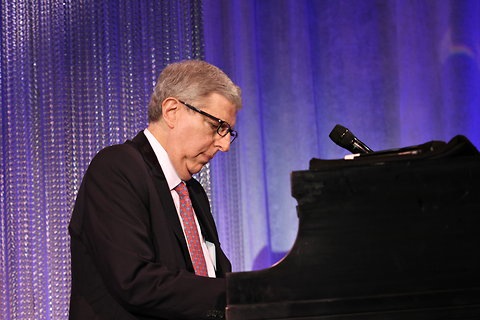
Marvin Hamlisch, an incredibly talented composer and conductor and frequent life coach to seasoned performers and students alike, died yesterday, aged 68, in Los Angeles following what has been described as a brief illness.
There are already many well-informed tributes flowing about his huge contribution to Broadway, Hollywood and the world of orchestral pops, and I could go on about the personal pleasure I’ve had in enjoying his shows, especially A Chorus Line, when I was growing up.
But what I really want to mention is the humility and accessibility that underlay his prodigious creativity. He was, for three decades, the toast of Broadway. He worked alongside Hollywood’s finest producers, directors and stars. Yet he always had time to advise and teach.
Thanks to a close working relationship with Garth Drabinsky during the now-incarcerated entrepreneur’s heyday as a theatre and concert producer in Toronto, Hamlisch was a regular in this city. His last official visits were to coordinate and conduct the Broadway and pops performances in the ill-fated Black Creek Festival at the Rexall Centre tennis stadium at York University last summer.
We had a chance to chat about various things. Two stood out: The need for any performer to learn not just how to play or how to act, but how to audition, and the importance of flexibility in preparing for a live concert, or watching it evolve over the length of a tour.
“I don’t stick to the printed program if I think something else will be better during rehearsal. I tend to think that everything’s written in pencil and that we have the glory of the eraser,” he said.
The thing is, he never left the impression that there is much he would ever have wanted to erase.
Of all the assessments I’ve read, the one that best captured the spirit of the man came from critic Stephen Holden of The New York Times.
Hamlisch had musical hits on stage as well as on screen, but he was the object of immense respect rather than adulation. We, as a society put to much stock in star quality, but what we need most, most of the time, is just someone reliable who knows what they’re doing.
Holden writes: “So why is Mr. Hamlisch, who died on Monday at 68, routinely overlooked when people are invited to name the greatest Broadway composers? One reason may be that he embodied a kind of ultimate professionalism. Personal self-expression wasn’t at the top of his agenda. Solving problems and doing solid work were more important. ”
+++
Here’s are bits of Hamlisch’s contribution to the classical repertoire, Anatomy of Peace, written in 1991 for the Dallas Symphony Orchestra, chorus and treble soloist:

John Terauds