
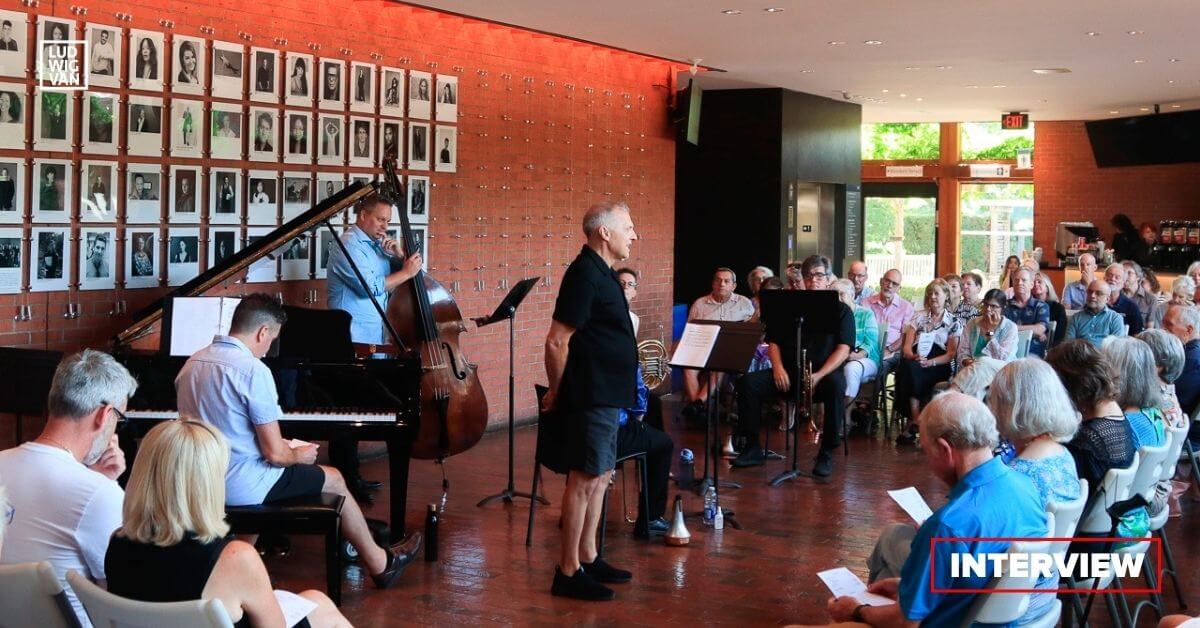
The arts can play a crucial role in the aging process, and it’s in recognition of that fact that the Shaw Festival has expanded on its innovative Positive Aging program. New events and workshops will be developed over the next three years that are designed to shift the focus around aging.
Often, discussions and programming revolving around aging tend to emphasize “decline management”. Shaw’s programs are designed to focus instead on preservation through creativity.
“Positive Aging is not simply programming for older adults — it is a shift in how we understand aging itself. For too long, aging has been framed as a process of decline to be managed. At the Shaw Festival, we believe growing older is something else entirely,” said Pragna Desai, Shaw Festival’s Director of Community Engagement and Outreach in a statement.
“We are proud to be at the forefront of advancing a new vision for aging — one defined by possibility, not by limitations, where older adults are active creators of culture, rediscovering their purpose, connections, and voices.”
The new programming that is under development builds on The Shaw’s successful Positive Aging pilot programs, which have been created over the last two years. Offerings include classes in memorization techniques, along with theatre improv and dance, and the Defy Dementia™ event, developed by Baycrest and the Centre for Aging + Brain Health Innovation (CABHI).
Programs are delivered by Shaw Festival artists and professional coaches.
“At the Shaw Festival, positive aging isn’t about staying young; it’s about growing whole,” added Desai. “When older adults engage their creativity, we have witnessed them strengthen their emotional resilience and reconnect with their sense of identity, agency and purpose. The Shaw is proud to create spaces where imagination remains limitless, and where creativity continues to flourish in every chapter of life.”
LV asked Pragna Desai, Director of Community Engagement & Outreach, Shaw Festival about the program.

Pragna Desai: Q&A
LV: What led to the creation of this program?
PD: In my recollection there were different threads that wove together in the creation of Shaw’s Positive Aging program. Dedicated Shaw patrons growing older linked to data awareness of the growing senior population in Canada and the US; the Shaw’s emphasis on real human connection in an online, digitized world where loneliness has been declared an epidemic, made stark by post-pandemic new realities; and a growing movement of social prescribing all leant themselves to developing a program that supports engagement and vitality for older adults.
It was an ongoing conversation. The Shaw Festival is a close community, and we knew of dedicated patrons who attended The Shaw for 20, 30, or even 40 years, who were reaching a point in their lives where they couldn’t attend anymore, and they were feeling socially isolated. Our data told us that over 50% of our patrons are over 55 plus, and that the national stats showed us that by 2043 1 in 4 Canadians would be over 65. We started asking ourselves, how can we help?
We know intrinsically, as arts workers, that experiencing something together is a human need, but ironically our phones, you know that thing that was invented to connect us together, were making us more isolated. We know that staying curious, being in the moment, and learning and creating are fundamental to happiness, health and longevity, but how can we translate this to our community and patrons? How can we support a growing movement of social prescribing, where a doctor literally writes a prescription for a patient to attend a play?
The Shaw is in the vanguard of a movement for real human connection. We launched our All.Together.Now. campaign last year to expand our campuses and programming to enable our community of all ages, interests and backgrounds to connect with their creativity and each other. We view our patrons as active participants in the work we do at The Shaw. With all these initiatives and realities aligning, we set out to find ways we could serve our patrons for longer into their lives.
LV: Our society tends to treat aging as a kind of disability, and as you mention, a period of nothing but decline, but non-Western societies very much value the contributions of older people. Were you at all inspired or informed by non-Western ideas?
PD: Personally, I can say yes. While I grew up in western culture, I have an eastern background. I’m a proud immigrant. I’m a combination of cultures. I have been fortunate to have lived in a number of countries including the US, France and Morocco, which has influenced my understanding of how aging is viewed around the world. I’m a loving member of an intergenerational home — I can absolutely say our work is inspired by non-Western ideas and practices, but also by the changing circumstances of our own population.
It’s important to note that in many cultures around the world it is not uncommon for three or four generations to live together in one household. It is the cultural norm and accepted that one does not age alone. When I was living overseas, I remember neighbours would ask where were my parents? Why weren’t they with me?
We can as a community be the salve to the epidemic of loneliness that has been created. The theatre arts are intrinsically communal and accepting. It’s the reason that the pandemic affected theatre so deeply. First to close and last to open, the very nature of our art requires human connection.

LV: How did you decide on which kinds of disciplines would be appropriate? Was it based, or partly based, on what people asked for? Or some other criteria?
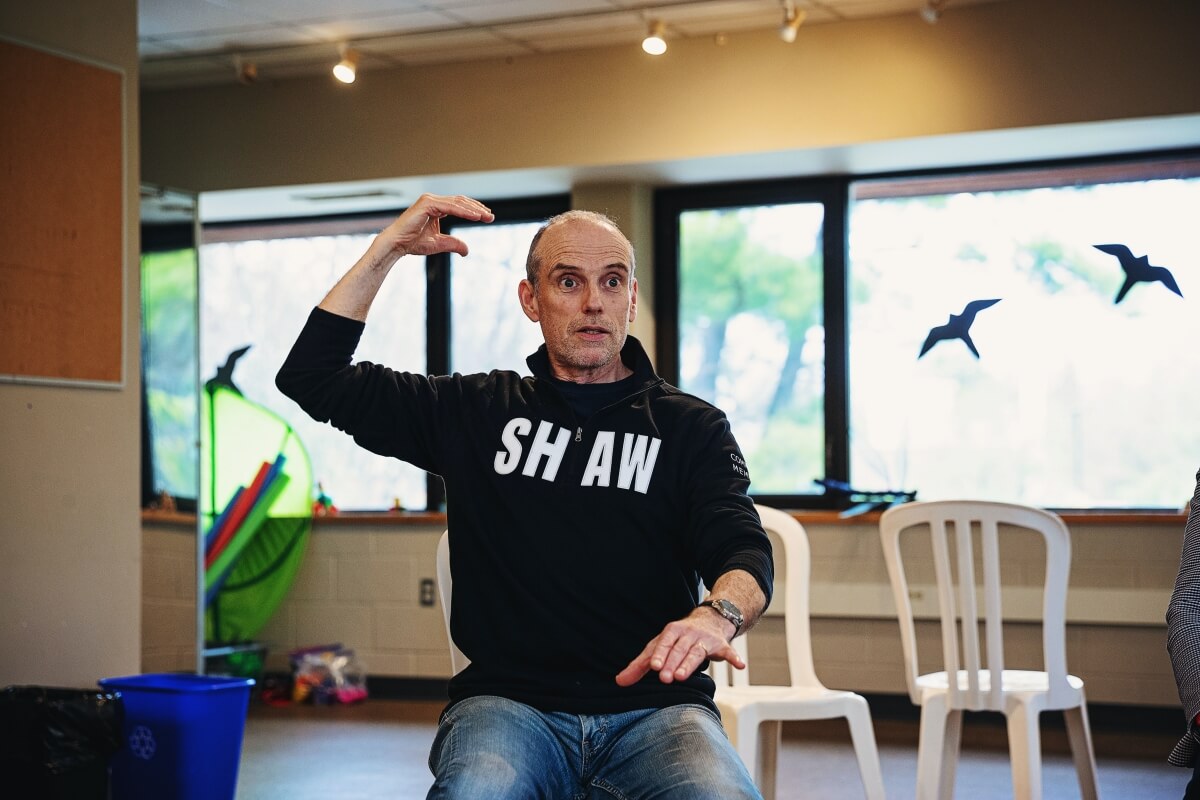
PD: Let me start by saying positive aging is not simply programming for older adults. It is a shift in how we understand aging itself. It’s important to note that the later chapters of life are not defined by limitation or preservation, but by possibility. The brain remains hungry for creativity and expression well into our 80s and 90s — the creative spirit doesn’t fade — it often peaks.
The arts have a critical role to play in shaping how society approaches aging and how each of us experiences getting older. Through creative expression, older adults move from passive recipients of care to active creators of culture — strengthening cognitive pathways, building emotional resilience, and rediscovering their purpose, connections, and voice.
The programming we have launched at the Shaw Festival has been developed using research, and community engagement with our patrons, local community, and industry experts. At the Shaw Festival, we are incredibly fortunate to have a volunteer organization, called the Shaw Guild, made up of over 400 volunteers who are predominantly older adults. We have worked with them on program development to understand interests and needs. We found they were particularly passionate about programs in theatre improv, voice training and scene study. It’s part of the foundation for our programming decisions.
We have also consulted with researchers, for example, like our friends at CABHI, the Centre for Aging and Brain Health Innovation, so we could understand the science behind aging, and how the arts could play a robust role. We learned how to construct frameworks and make informed decisions about the programs that would offer the greatest benefits to our community.
Based on these insights, for the past two years, we piloted the Positive Aging programs in voice training, theatre improv, scene study, dance & movement, and memorization techniques. Our aim was to reduce social isolation, improve cognitive flexibility, physical movement, and support agency and presence. We took pains to always ask for and receive feedback so we can continually keep working to make these programs as effective as possible, and as beneficial to the community as we hope they can be. We made the announcement to formalize and expand our Positive Aging programming this year.
I must add that this is possible because of our visionary donors. Over the next three years, the Shaw Festival will create and offer thousands of new Positive Aging programs, empowering older adults to explore their creativity, curiosity, and build meaningful social connections through theatre and the performing arts.
LV: How are the workshops — improv, voice control, scene study, memorization, and so on — specifically adapted for older participants?
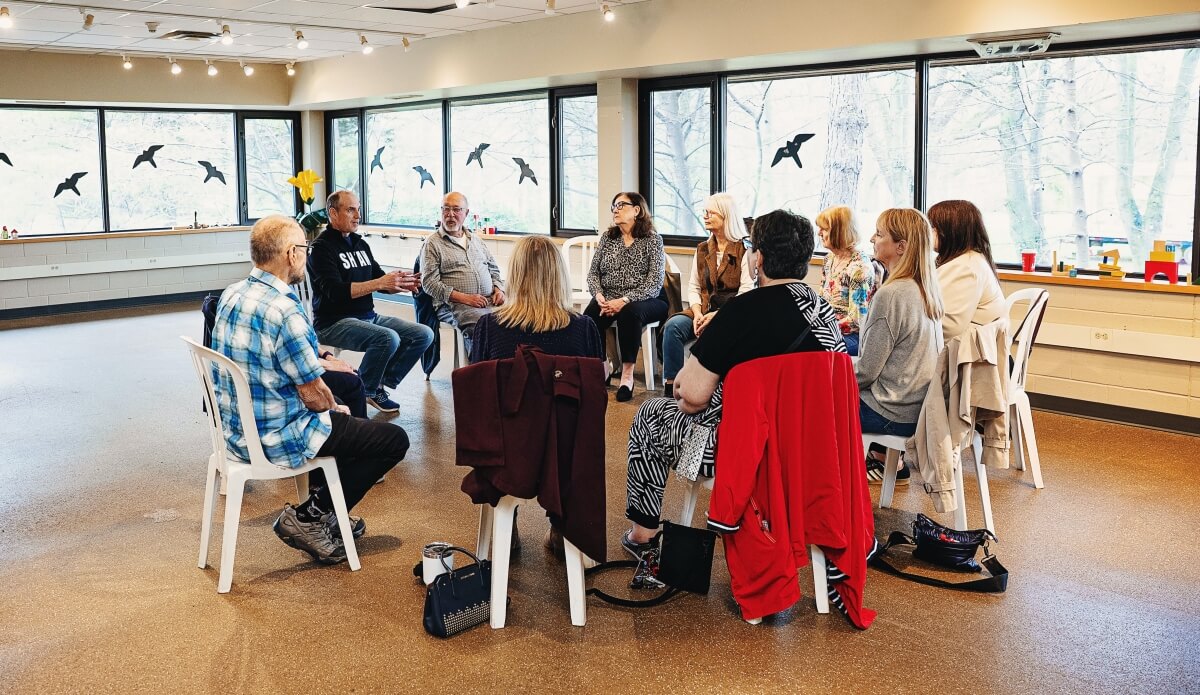
PD: The Positive Aging workshops are tailored for our older participants, using simple shifts to make the training accessible. As an example, when voice training is done with Shaw actors it can be quite physical with company members trying different stances on their feet or laying on the ground. For the Positive Aging program, it has been adapted and the training is done sitting on chairs. Participants can sit if they feel more stable and comfortable. The artist-facilitators and coaches consider the abilities of each individual, understanding they can vary, and encourage participants to work within their own capabilities. They pay attention to challenges like hearing loss and low vision. Scripts are often printed in larger font. The coaches know to speak clearly and “on their voice”, and we pay attention to any feedback and offer options accordingly.
LV: What kind of impact does it have on participants? Do you have any examples you can share?
PD: Regarding impact, one of the perks of this program is the stories that have been coming my way. We’ve received so many glowing comments and survey results from participants about how Shaw’s Positive Aging programs are affecting their lives, helping them connect socially with peers, find joy, realize new interests, find their voice and providing opportunities to build community and create camaraderie.
I have heard with my own ears the impact of the voice technique classes. All the Shaw Festival docents were part of the pilot program of voice training. I have heard the improvement in vocal strength as they take their groups of patrons around the Festival for backstage tours. The slow decline of the aging voice can affect how older adults walk through society. Vocal frailness can affect how they are perceived and whether they are taken seriously. It leads to feeling dismissed or ignored. By training the voice, like stage actors, they improve their strength and vocal presence and contributes to being listened to and heard.
I had the most touching experience last year. A lovely woman I know came up to me at the Relaxed Performance of A Christmas Carol, and said, “Pragna, the Defy Dementia event has changed my household.” She related that her husband has been terrified of brain deterioration, as his father had early onset of Alzheimer’s. He had been avoiding getting his hearing checked, and his memory checked, though they had both noticed signs of memory loss. That he’d given up playing music, though an accomplished musician his whole life, and was avoiding the subject. She had said to her husband, “Hey, we need to talk about this.” He had reluctantly agreed. So she proceeded to sign him up for a brain assessment and she brought him to the dementia event and presentation at the Shaw. She couldn’t have been more surprised and delighted to watch him listen with keen interest, laugh, join in the theatre improv workshop, and come away feeling hopeful. She related that her husband has since picked up his instruments again, and they both feel they have some sense of control and understanding about their agency in how they age. She cried and laughed with me, and said, darn it, she’s the one that needs hearing aids.
It was very touching. It was proof that this movement to realize our charitable purpose impacts our community. We are nudging forward with purpose, and I think we are headed in the right direction. Shaw is advancing a new vision for aging through creativity, connection, and lifelong expression — expanding programs that create spaces where imagination thrives and new possibilities, emerge at every stage of life.
- Find out more about The Shaw’s Positive Aging programming, and register for current offerings, [HERE].
Are you looking to promote an event? Have a news tip? Need to know the best events happening this weekend? Send us a note.
#LUDWIGVAN
Get the daily arts news straight to your inbox.