
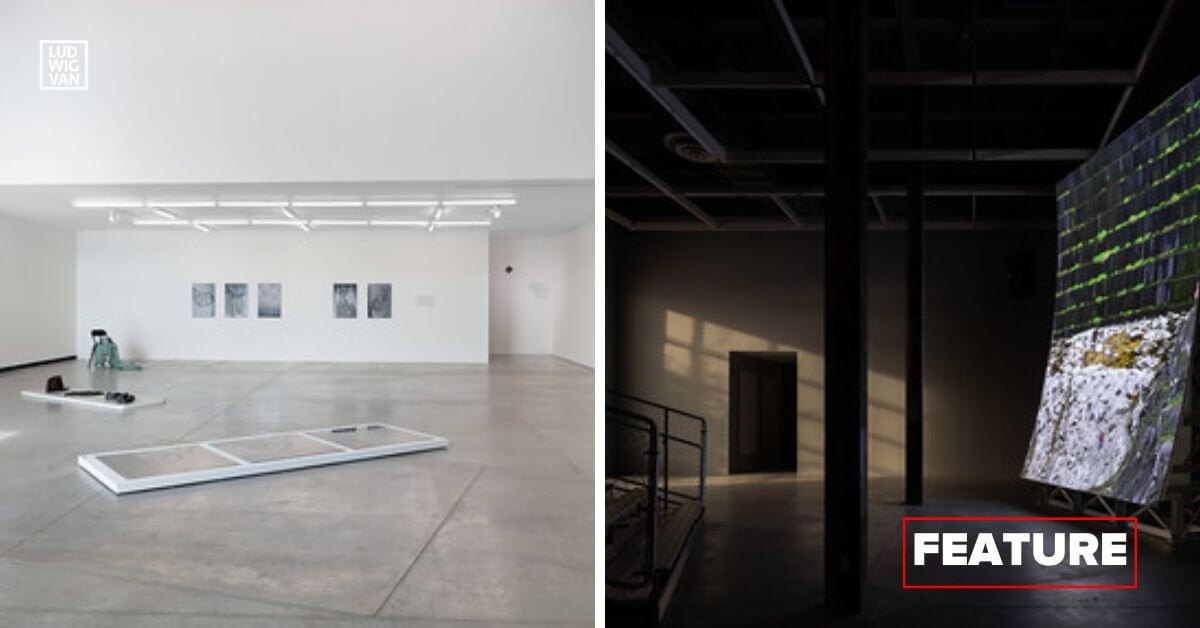
The Power Plant Contemporary Art Gallery at Toronto’s Harbourfront is showcasing the work of artists Jeneen Frei Njootli and Lucy Raven in two fascinating exhibitions. The shows are on view until March 22, 2026.
Both artists present perspectives that offer alternative views of Western society as it exists in North America, and both are based in the land.

Jeneen Frei Njootli: The skies closed themselves when we averted our gaze, 2025
Sound, sculpture, and spatial interventions come together in Njootli’s exhibition, exploring the way of life of her native Vuntut Gwitchin homelands in Old Crow, Yukon. Through that exploration, they illustrate knowledge systems based in the land, how memory is embodied, and Indigenous sovereignty.
The Vuntut Gwitchin artist also has Czech, Dutch, and Jewish ancestry. She earned a BFA from the Emily Carr University, followed by an MFA from the University of British Columbia.
As you enter the large exhibition room, scattered with objects on the floor and walls, the first thing you’ll notice is the sound. It’s a recording of a performance by Frei Njootli during the opening days of the exhibition, playing on a violin made from the horns of a female caribou that was harvested by the artist’s family. Hunting as an integral part of the way of life in Old Crow is a strong theme throughout the exhibition.
Another remainder of Jeneen’s performance are found in clusters of tiny green glass beads scattered over the floor. They’ve collected in some of the cracks in the concrete floor, in areas that were suggested by the audience.
Notions of traces and residues are often present in the artist’s work. There is a pair of snow pants that were found outside Njootli’s home, dipped in resin to preserve their shape. Culture is presented, but more as an impression that invites exploration and more questions, and not as a definitive “artifact”.
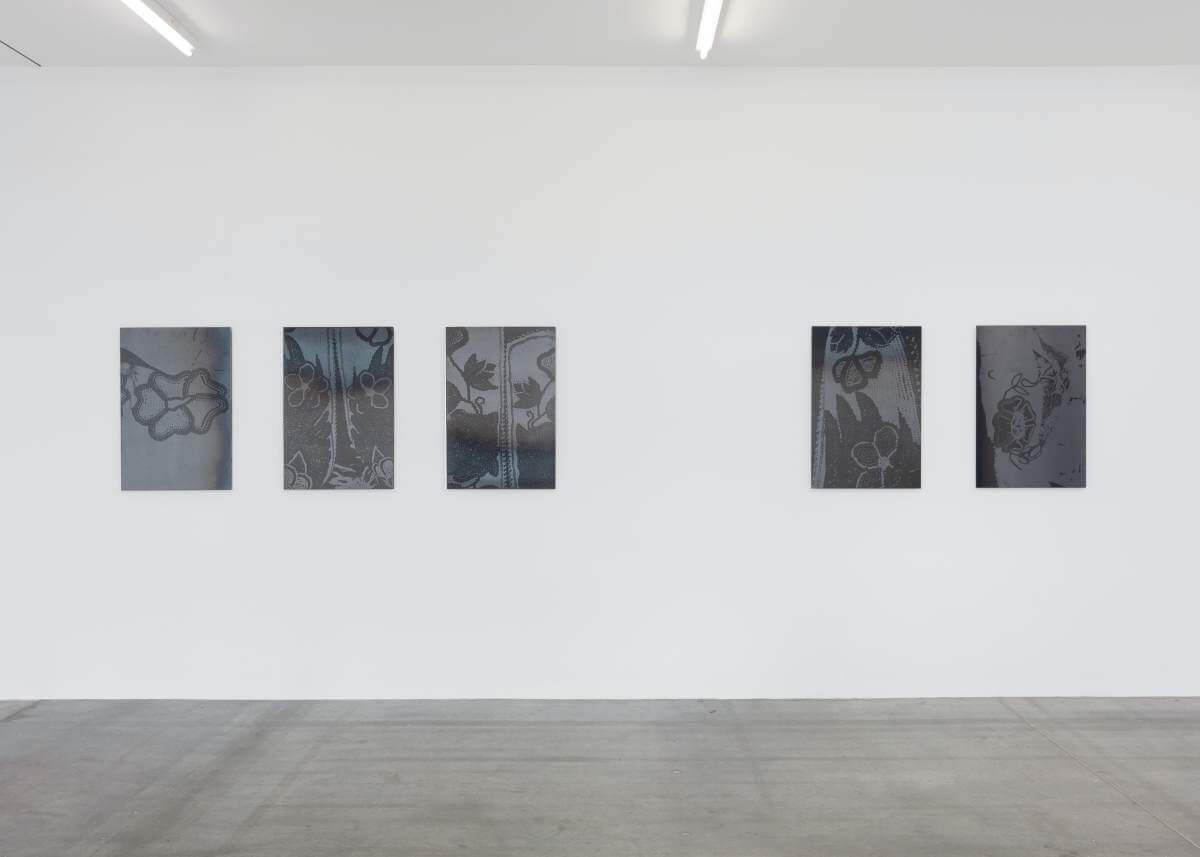
Beadwork is an important part of Inuit culture. Njootli presents it in prints made on metal, hung on the wall, each showing portions of a floral design. There is also a photograph on metal of the impressions the beads make on someone’s back, created as the body carries a baby, for example, whose carrier is adorned with a beaded pattern.
A cloth with brown markings hangs on the wall. The various markings were created by smoke, after the cloth was hung over a fire.
The infamous starlight tours — where the RCMP would pick up an Indigenous man from the street, drive him to a remote area in the freezing cold, and abandon him to freeze to death — are commemorated in a double triptych of prints on metal. The metal, a cold and reflective surface, conveys the desolate nature of the subject.
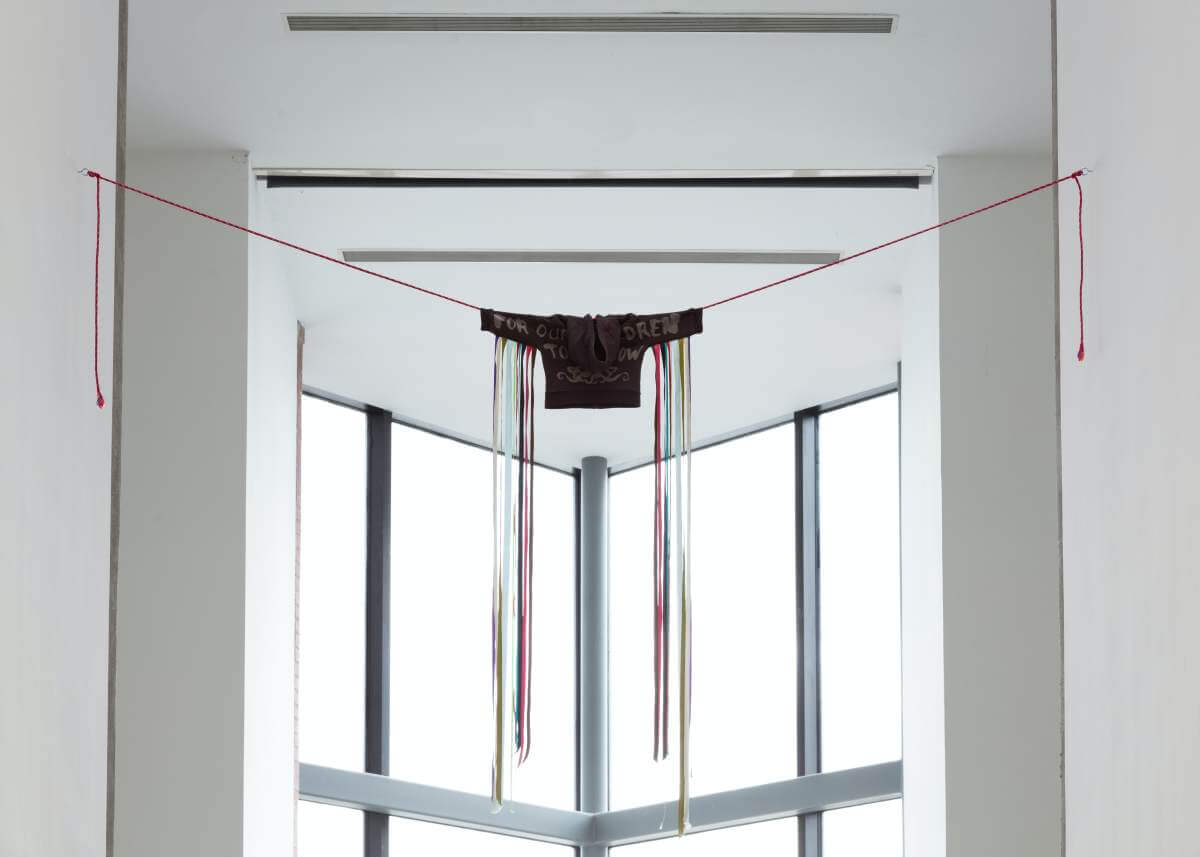
A few items are also displayed in a separate hallway, the most striking being a child’s t-shirt that is hung from the ceiling, marked “For our children tomorrow”..
For those of us from the south of Canada, The skies closed themselves when we averted our gaze offers a glimpse into the way of life of the Far North, one that is close to the land and its varying moods, and its often fraught relationship to outsiders.

Lucy Raven: Murderers Bar, 2025
Lucy Raven was born in Tucson, Arizona, where she earned a BA in art history from the University of Arizona. She followed that with an MGA from Bard College’s Milton Avery Graduate School of the Arts in New York. She is currently based in New York City. Her multidisciplinary work revolves around the moving image — animated, digital, mechanical, or cinematic — as well as the landscapes and myths of the American West. She often explores issues around resource extraction and the transformation of the environment.
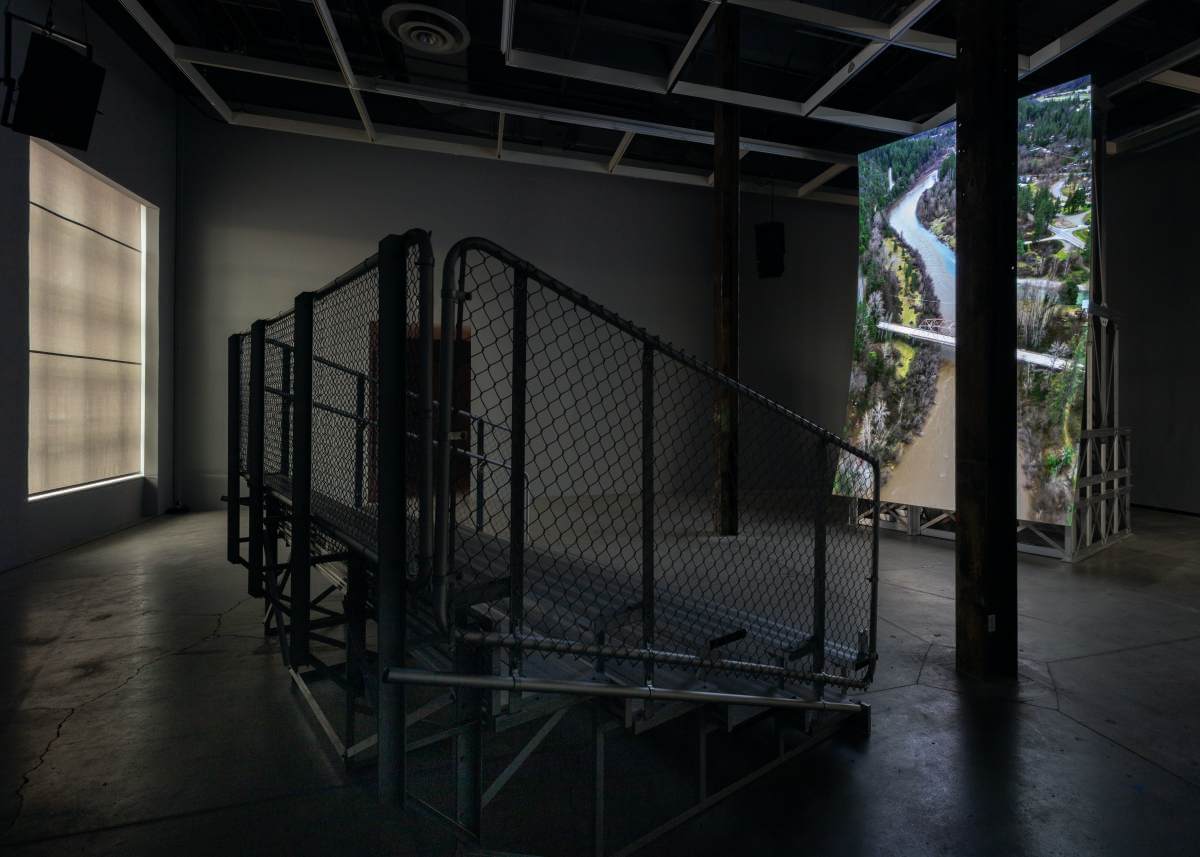
Her video exhibition Murderers Bar (2025) is the last of a series of installations and related works called The Drumfire, which was co-commissioned by the Vancouver Art Gallery and The Vega Foundation. It features a video that is projected on a tall, free-standing aluminum screen located within the Power Plant Gallery, with seating on an aluminum bleacher.
The video revolves around the Klamath River in Northern California, and the removal of a large concrete dam that was built on it about a century ago. The dam was removed as the result of decades of activism by the Yurok Tribe, Karuk Tribe, Klamath Tribe and Shasta Indian Nation, and is the largest dam removal project in American history. It restores a river to its natural course, with the intention of restoring the historic habitat of the Chinook and Coho salmon.
Murderers Bar is the name given to a site along the river where settler violence took place. Frictions between the local Indigenous people and white miners in the region came to a boiling point in the late 1920s, and a group of drunken miners massacred members of the Sutter Indian Tribe. The location was subsequently called “Happy Camp” by the settlers.
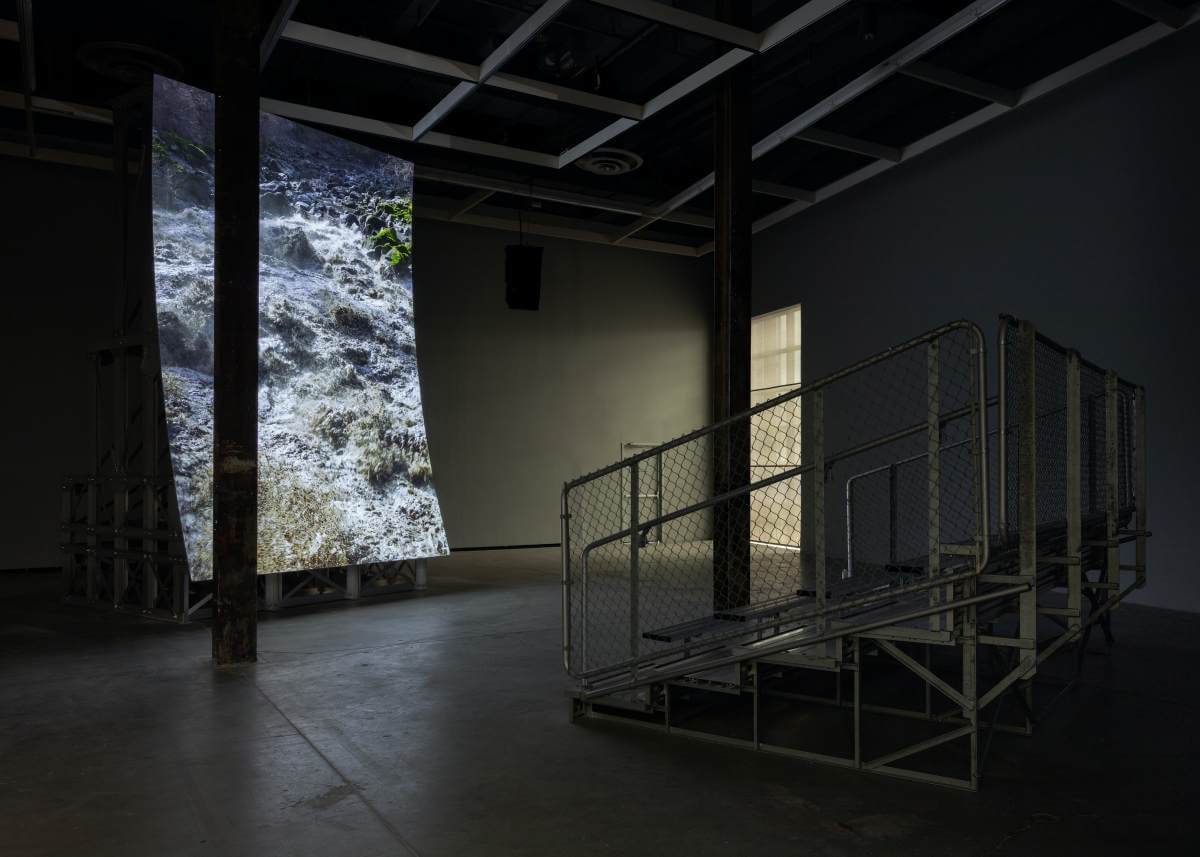
Raven’s film documents the destruction of the dam, and the subsequent restoration of the river. She uses cinematic techniques — in fact, some of the shots will remind you of the helicopter chase-from-above scenes in movies like The Shining or Figures in a Landscape. The score by composer Deantoni Parks, also a percussionist, enhances the gorgeous and revealing visuals of the film.
The film takes about 40 minutes in total, and is designed that you can enter it at any time. It follows the river to the dam, where you can see workmen installing the explosives, then watching from the distance of a nearby ridge as it sets off in a tunnel underneath the massive concrete structure.
The water is gorgeous in all its different aspects, from the relative quiet of the pools that precede the dam’s destruction to the rushing, silty brown streams that gush out once it’s no longer being held back. The camera takes us above the river, but also below it, to get lost in the bubbles and the bits of silt that have become freed by the river’s liberation.
What comes across strongly is also that the river is alive — it rushes eagerly to reclaim its formerly desultory river bed, swirling over the rocks with a living energy, zigzagging across the forested landscape, and gradually slowing until it reaches its mouth at the Pacific Ocean.
It’s an emotional journey that invites viewers to think about water as something much more than what comes out of a tap, and to consider the forces involved in its management.
Take A Deeper Dive
There are opportunities to take a deeper dive into the exhibitions.
- Curator-Led Tours — Monthly tours offering in-depth insights into Lucy Raven and Jeneen Frei Njootli’s exhibitions. Upcoming tours: February 21 (Kate Whiteway & Sarah Edo), March 21 (Julia Paoli & Adelina Vlas).
- Cross Circuits Talk with Waubgeshig Rice (March 7) — Artist and curator conversations exploring themes in contemporary art.
- Power Kids Hands-On Workshops — Family-friendly workshops inspired by the exhibitions, including Power Kids: Family Day Drop-In (February 16) and Power Kids: Make Your Mark (March 8).
Details [HERE].
Are you looking to promote an event? Have a news tip? Need to know the best events happening this weekend? Send us a note.
#LUDWIGVAN
Get the daily arts news straight to your inbox.