
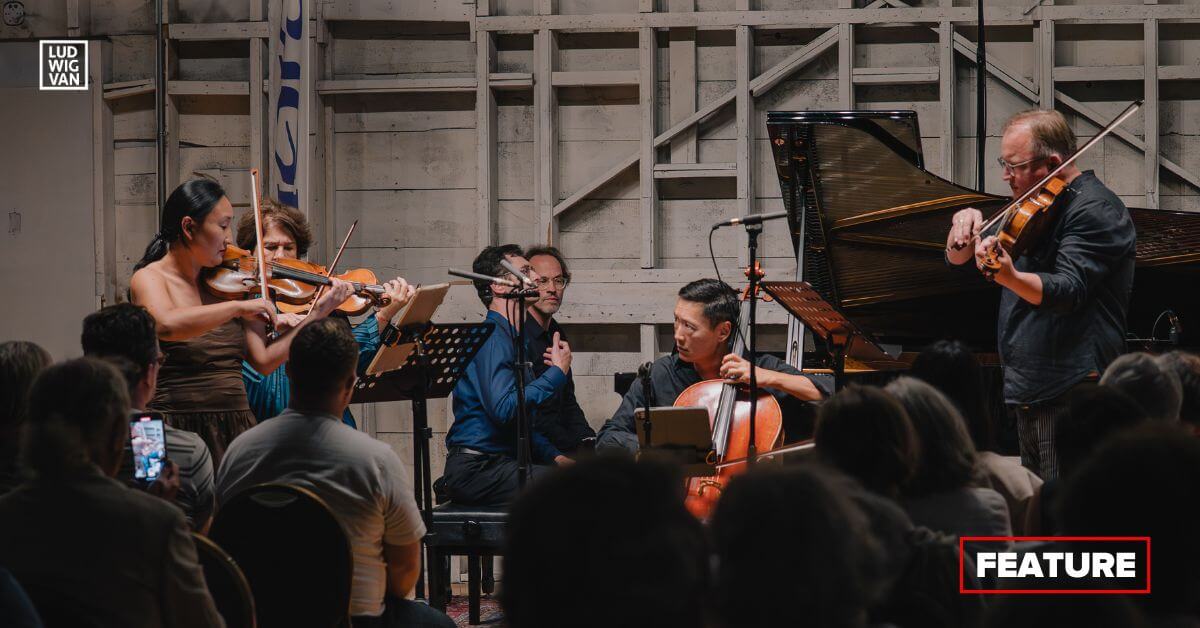
Prince Edward County (PEC) is well known for its sandy beaches, quaint small towns, world class wineries and an exciting food scene.
It may be a surprise that a recent report by Hill Strategies Research Inc. finds that Prince Edward County is now tied with Stratford and Niagara-on-the-Lake for having the highest concentration of artists in Ontario, and the seventh highest in Canada. Along with its strategic location within accessible distance from Toronto, Ottawa and Montreal, it makes the perfect place for a summer music festival.
BIGLAKE Festival
It takes hard work and vision to build a festival from the ground up, and it certainly helps that the founders have pedigree and extensive experience in classical music.
Johannes Debus, Music Director of the Canadian Opera Company, is highly respected in Canada’s classical world. Together with his wife Elissa Lee, a JUNO Award-winning violinist, the power couple has been co-directing the festival, bringing world-class musicians across multiple genres to PEC.
This year marks BIGLAKE’s fifth anniversary, and the theme is “Hidden Gems.” As its name suggests, the program introduces audiences to lesser-known composers and works, and invites the audience to discover unknown territory.
The Vibe
For one week starting August 15, BIGLAKE presents 14 concerts across a variety of venues in PEC, from historic music halls to barns, hotels and even private homes, inviting attendees to explore and experience different parts of the county.
The concerts are informal yet intimate, with musicians and festival organizers mingling with patrons during intermissions and after the concerts. Each performer takes time to explain the music they are playing, offering interesting anecdotes that enrich the concert experience.
I was fortunate to experience the first three nights of BIGLAKE 2025, and I got a real sense of community among the musicians, audiences, festival organizers and volunteers.

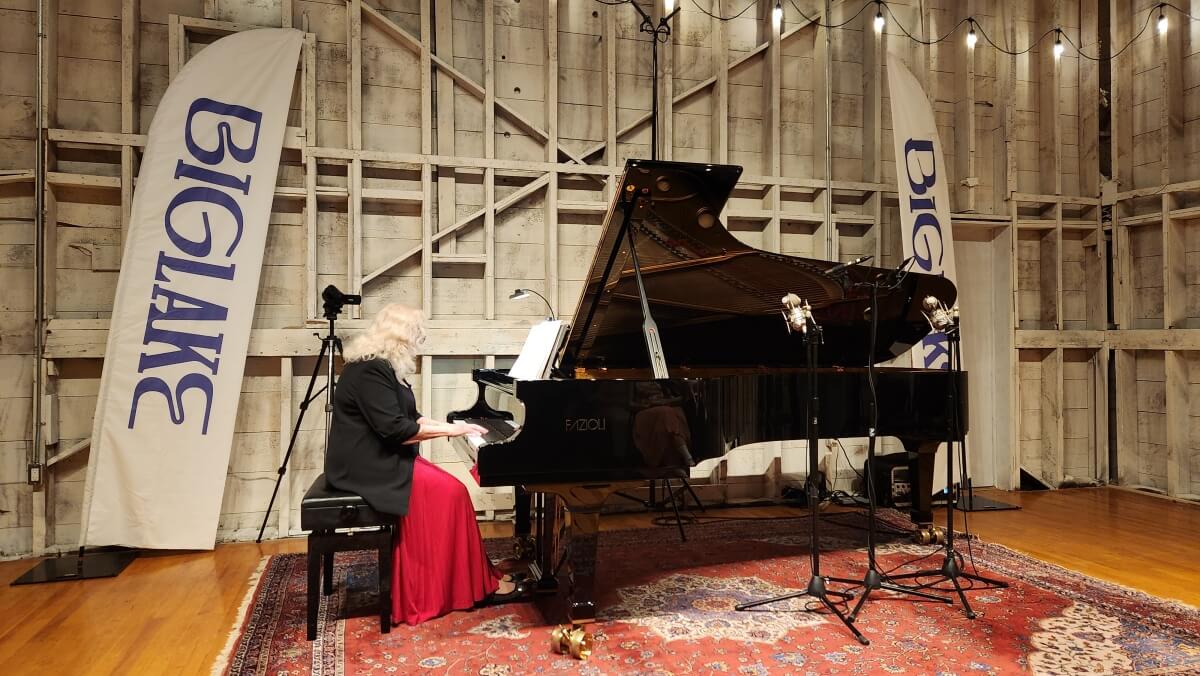
Opening Night: Christina Petrowska Quilico
An Order of Canada recipient, this award-winning pianist is a legend in Canada’s classical world, known for championing new music. On opening night, she took us on a journey through different countries, eras and genres, beginning with a waltz and ending with a tango.
The first half focused on women composers. Langsamer Walzer by Ilse Fromm-Michaels was a mere warm-up for Christina, followed by three pieces by Meredith Monk taking us from St Petersburg to Paris. Shifting to a completely different style, she then played two jazz pieces by Ann Southam. Despite the sleepy, bluesy start, the pieces contain some improvised passages that demand animated gestures, ending with a wild glissando.
It was a treat to have composer Alice Ping Yee Ho present to introduce her work A Manic Ride Through Lollipop Hell. Alice explained that the piece is adapted for solo piano from her one-act anime opera Labyrinth of Tears. A mix of pop and classical styles, it has no fixed key, and races from dream-like states to complete chaos, as if to mirror one’s complicated and fractured mind. The dramatic piece was the most technically difficult of the evening. Christina displayed some adventurous piano playing, with a style that bridged classical tradition and contemporary innovation.
The lighter second half opened with Capriccio by Japanese composer Masamitsu Takahashi, an unusual mix of jazz and Japanese tonal elements which also features a significant left hand part. Next, we were transported to a 1930s jazz club with two hits by Jazz great Art Tatum. I’ll never be the same and Don’t get around much anymore have a ragtime vibe and singable tunes that some in the audience would recognize.
The concert ended with three Brazilian tangos by Ernesto Nazareth that are infused with Afro rhythms. The first is upbeat and joyful. The second is slow and sensual with a beguiling melody. Christina’s undeniable virtuosity was showcased again when she played the energetic final tango at breakneck tempo.
It is worth noting that the concert took place at the historic Wellington Music Hall, BIGLAKE’s home base, with a relatively small capacity of 150, making it an extremely intimate concert experience. The centrepiece in the hall is a Fazioli concert piano with a distinctive warm sound, an instrument of envy for all pianists and a fancy treat for us all.

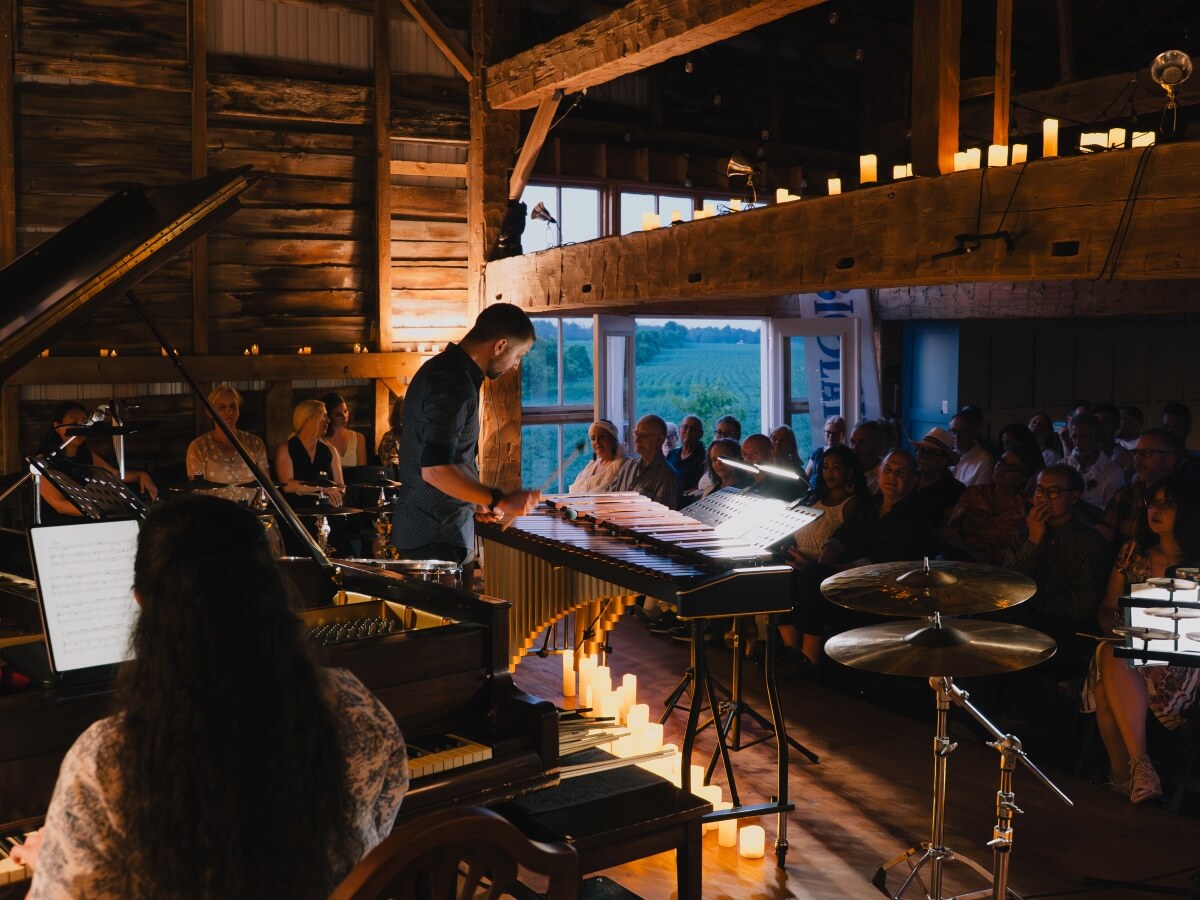
Day 2: Starry Night Candlelight Concert
The setting is Cunningham House, a lovingly-restored 1804 barn surrounded by nature, overlooking a vast farmer’s field. Inside, candles on the stage and wooden beams flickered as the sun set. About 80 patrons enjoyed crisp wines courtesy of Rosehall Run Winery, while listening to a dreamscape of haunting, unexpected sounds.
Starry Night features SHHH!! Ensemble, which consists of another husband-and-wife duo: percussionist Zac Pulak and pianist Edana Higham. Zac played mainly on a marimba, but he constantly moved seamlessly back and forth between the crotales, cymbals, drums and chimes, creating pyrotechnics with his mallets.
As the program suggests, the music selections — many of which are written especially for SHHH!! Ensemble by Canadian composers — “reflects on the night sky and evokes a sense of wonder at the vastness of space.”
Pieces by Mari Alice Conrad, Daniel Mehdizadeh and Harry Stafylakis all have celestial themes, depicting shooting stars, death of a sun and moonlight rituals. The unpredictable cacophony of sounds painted the picture of the vastness of space, its void punctuated by chaos created by the movement of the solar systems.
The program then turned to even more experimental sounds. Georges Aperghis’ Retrouvailles constructs a visual narrative through movement, interaction, and fragmented dialogue. The two performers stood face to face, embracing and clapping each other’s shoulder blades to create sounds and beats set to seemingly random spoken words.
In Paolo Griffin’s Resonant Bodies in Space, an EBow on the piano strings created a sustained drone in the background, while Zac and Edana slid bows against the cymbals to produce a spectrum of resonances through the extremes of frequencies. The unique sonic environment was supposed to evoke the sensation of floating through space, but I feel that may have been lost on the audience.
There were also pieces by Mario Castelnuovo-Tedesco, whose Fantasia for Guitar and Piano is adapted by SHHH! Ensemble, and Spirit Gradient by Jocelyn Morlock. The latter was an immersive soundscape that focused on feelings rather than melodies, not defined by any musical style or period.
In a program that emphasized texture, resonance and motion, rather than melody or rhythm, it was a relief to hear some familiar works. Interspersed throughout the concert, the ensemble played three movements from J.S. Bach’s Cello Suite in C Major, which grounded us back to earth.
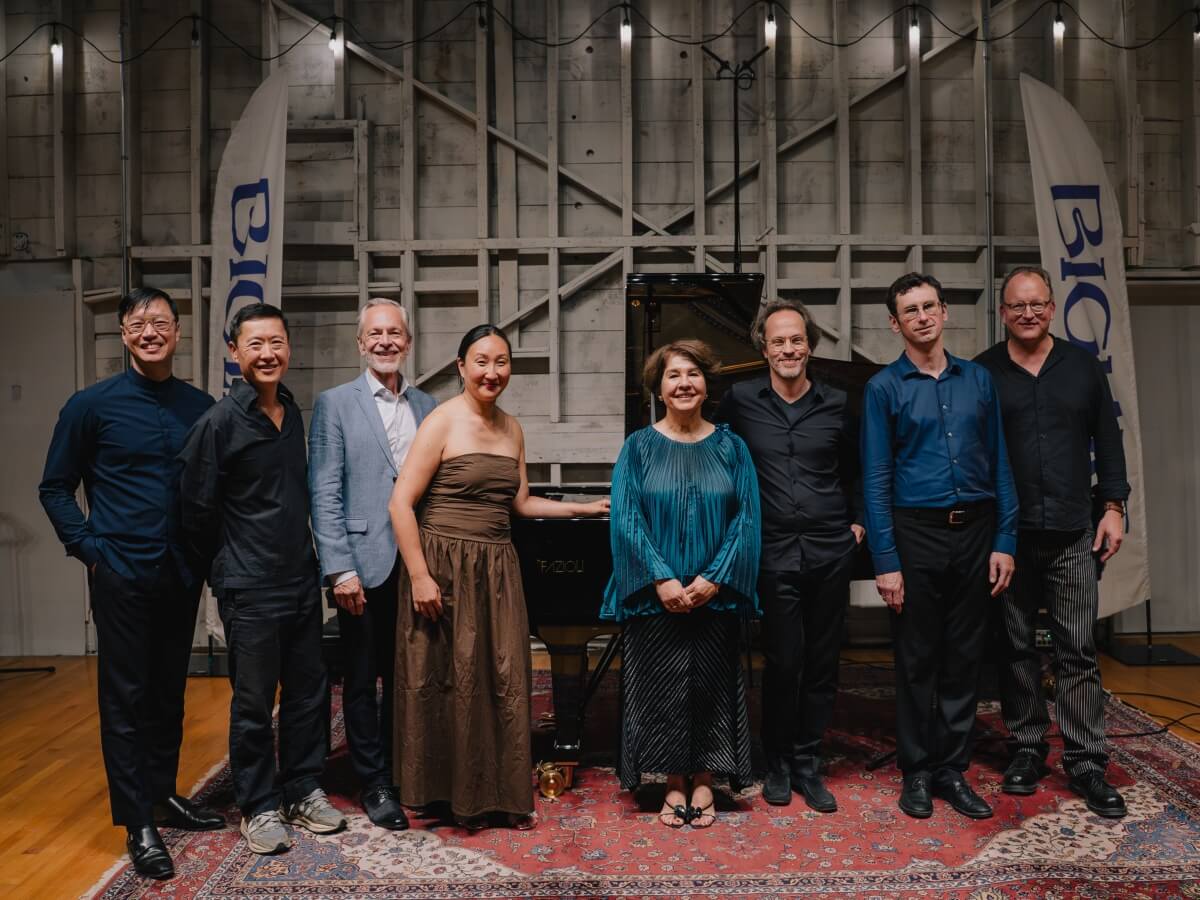
Day 3: Hidden Gems Marathon
I traded my heels for runners, and loaded myself with coffee to brace for this full-day event. Back at Wellington Music Hall, the Marathon was three concerts in one day, each featuring a lesser-known composer, whose works are unfamiliar even to most professional classical musicians, but deserve to be heard and revived.
Concert #1: Meet Ernst von Dohnányi (1877-1960)
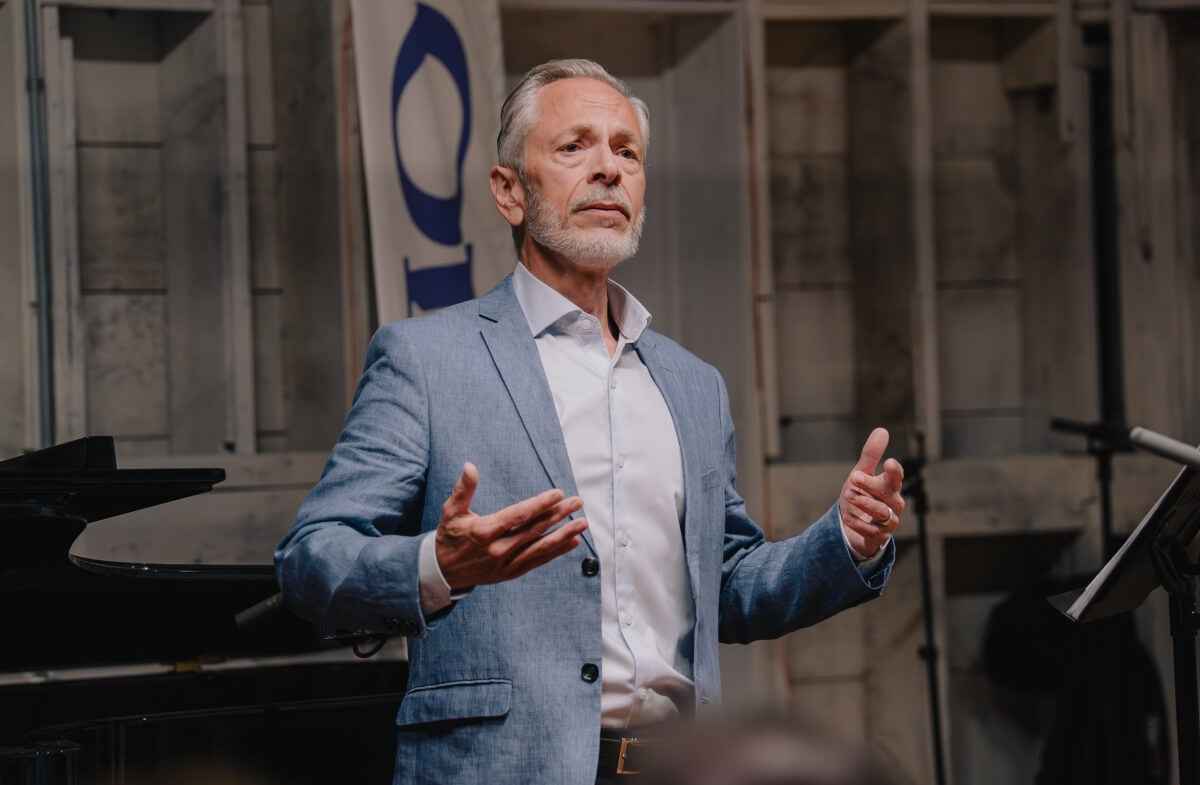
The first concert of the day was performed by Ensemble Made in Canada, which comprises violinist Elissa Lee, cellist Trey Lee, and pianists Philip Chiu and Johannes Debus. Because their usual violist is on maternity leave, they brought in Sebastian Krunnies as a guest violist from the Berlin Philharmonic Orchestra.
Hungarian composer Ernst von Dohnányi’s style is primarily Romantic, with subtle influences of Hungarian folk music. His compositions got the seal of approval from the more famous Johannes Brahms, who promoted Dohnányi’s works. The program fittingly featured works from both these composers.
Dohnányi’s Violin Sonata op.21 is both introspective and passionate at the same time. There was good conversational flow between the violin and piano. The piece was an equally thrilling showcase for both Elissa’s violin virtuosity and Philip’s expressive piano playing.
Sebastian captivated with his musicality in Brahm’s Viola Sonata in F minor op. 120, filled with intense emotions and finishing off with a signature Brahms flourish.
Dohnányi’s Serenade op. 10, played by a trio of violin, viola and cello, is a five-movement folk-inspired piece that gives a distinct voice to each instrument. In particular, the spirited, fugue-like third movement is full of rhythmic interplay and quick exchanges between instruments. The musicians were up to the task, playing with precision and unison throughout the presto passages.
For many of us, the highlight of this concert was Johannes and Philip playing a duet version of five of Brahms’ Hungarian Dances, delighting us with music that was familiar. Both excellent pianists, the animated duo was obviously having fun and they complemented each other like old friends who finish each others’ sentences.
Concert #2: Meet George Enescu (1881-1955)
Even though Enescu is regarded as one of the greatest musicians in Romanian history, his works are not well known in this part of the world. In addition to his Romanian heritage, his works contain influences from Paris and Vienna, where he had lived.
This second concert featured two musicians renowned for their interpretations of Enescu’s works: celebrated violinist Mihaela Martin and pianist Ilya Poletaev.
Both Mozart’s Sonata for Violin and Keyboard, K.454 and Brahms’ Violin Sonata No. 2 in A Major op.100 showcased Mihaela’s clean and agile technique paired with soulful phrasing. She played with an understated elegance and passion that was never excessive. Ilya’s accompaniment was sensitive and balanced.
Enescu’s Violin Sonata No. 3 op. 25 is an abstract piece infused with elements of nature, dance and Romanian folk spirit. Filled with contrasts of romantic lyricism and tumultuous harmonic clashes, the piece is technically demanding to play for both the violin and piano, and admittedly a bit challenging for the audience to comprehend.

Concert #3: Meet Reynaldo Hahn (1874-1947)
For the final leg of the Marathon, we were transported to a Parisian salon during the Belle Époque, where composers César Franck, Camille Saint-Saëns, Jules Massenet, Gabriel Fauré and Reynaldo Hahn would have been hobnobbing (and getting drunk, presumably.)
To start, Fauré’s Dolly Suite for piano four hands was brought to life by the capable hands of Philip and Ilya. The pair had a nice balance of dynamics and a crisp touch. Paris’ joie de vivre was especially present in the fifth movement.
Trey delivered an impassioned performance of Saint-Saëns’ Allegro Appassionato. It was magical to watch his intricate fingerwork in the rapid passages, traversing into the extreme high range of the cello.
Massenet’s famous Méditation de Thaïs was one piece that everyone would easily recognize. Normally performed on the violin, it was given an exquisite twist by Sebastian on the viola instead, and the result was no less compelling.
There were several works by the feature composer. Hahn’s Nocturne for violin and piano is an elegant chamber piece that captures the composer’s characteristic refined charm and lyrical warmth. Under Elissa’s deft fingers, the violin sang with graceful, flowing lines while Ilya’s piano provided a harmonically rich backdrop.
Hahn was best known for his art songs and salon music, and the festival brought in extra star power from veteran bass Alain Coulombe. The selection of five songs depicts different aspects and stages of love from adoration, courtship and commitment to loss, mourning and reminiscence of lost love. Alain’s most alluring and magnetic voice was matched by his impeccable diction and phrasing. Hearing him in this intimate venue instead of the usual big opera house was an elevated experience.
The grand finale gathered all or most musicians on stage to perform select movements from Franck’s Piano Quintet and Hahn’s Piano Quartet in G.
This day was a feast for lovers of chamber string music, performed by high calibre musicians from Canada and across the pond. When the concert finished, there was noticeable triumph on Johannes and Elissa’s faces that read, “We did it again!”

Final Thoughts
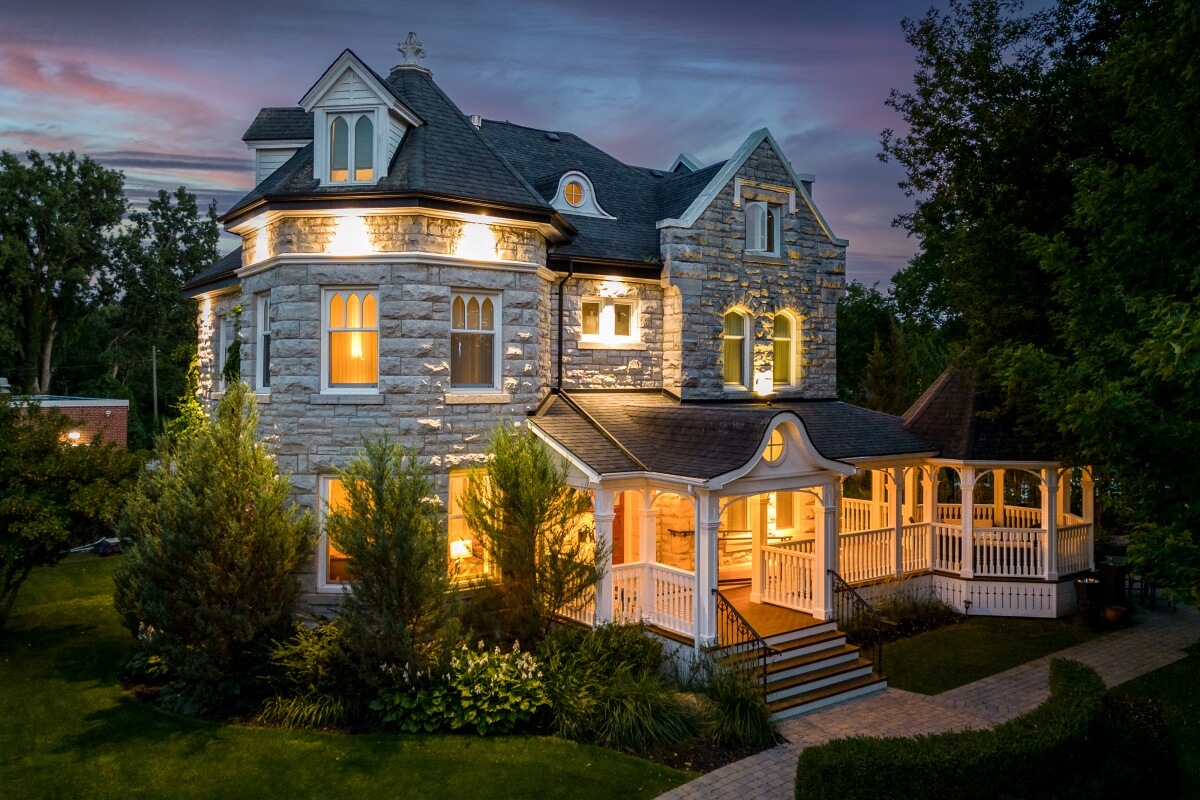
Prince Edward County has many hidden gems besides BIGLAKE. The Manse Boutique Inn where we stayed was one such gem. It retains the historic charm of an early 1900s church rectory, while providing every luxurious modern comfort in the tastefully-appointed rooms, alongside beautifully landscaped grounds that also house a pool and hot tub.
The family-owned inn is run by a friendly young couple, Megan Fitzpatrick and Max Dallamore. Every morning, Chef Max prepares a delectable and healthy breakfast of home-baked goods and produces from PEC farms. The Manse is truly boutique in every sense, and the hospitality is superb.
The same farm-to-table cuisine is expertly crafted in two excellent restaurants where we had the pleasure of dining. Bloomfield Public House and Hartleys Tavern are both fine-dining establishments with inventive menu offerings featuring the bounties of PEC. Their delicious foods were a feast for both the eyes and stomach, and left us yearning to go back for more.
Discovering hidden gems of Prince Edward County — the music, history, natural scenery, boutique hotels and gourmet foods—it was truly an unforgettable indulgence of all the senses.
- The BIGLAKE Festival continues until August 23. Info here.
Thanks to The Manse Boutique Inn, Bloomfield Public House and Hartleys Tavern for their generosity, and to Susan Smythe-Bishop for helping to organize this special feature.
Are you looking to promote an event? Have a news tip? Need to know the best events happening this weekend? Send us a note.
#LUDWIGVAN
Get the daily arts news straight to your inbox.