
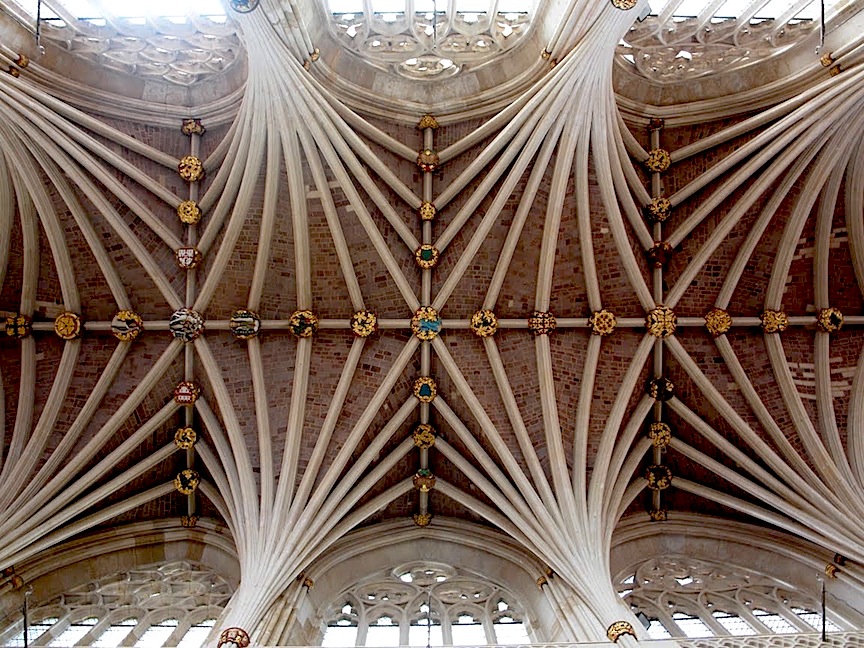
Renaissance choral composers wrote for vast, reverberant spaces. Bach wrote his harpsichord pieces for small rooms that wouldn’t smudge the intricate counterpoint. In the same way, a performer needs to adapt their playing style to the place where people are going to hear it.
The practical side of acoustics is something we instinctively react to, but seldom think about.
The Banff Centre has produced a wonderful, 10-minute podcast, “These rooms are instruments,” that illustrates how space affect and inspires composers, performers and audiences, that is well worth hearing:
+++
The podcast helped me remember how hearing my little voice fill a very large space for the first time had me walking on air for a long time afterward, and how important it is to get children out of the dry acoustic of a classroom and out into a space where they can experience the wonder of natural amplification.
It is the road to musical epiphanies.
Here is a setting of the Te Deum by English composer John Ireland (1879-1962) written to sound its best in an acoustic like the one we hear around the choir of Lincoln Cathedral, led by Colin Walsh (the organist is Andrew Post):

John Terauds