

There are acts of remembrance and concerts of remembrance today. There are also several worthwhile concerts that are just about the music.
Last night, I went to a concert of music written in wartime but that did not refer to it specifically. There are many pieces of music written well after the fact that commemorate specific tragic events or acts.
In a religious ceremony, tragedy can be commemorated through ritual, which provides the vessel in which people can combine their individual emotions and responses into a meaningful collective experience. The same thing happens at a cenotaph, as a sequence of steps and sounds gets re-enacted year after year.
But what does remembrance mean and how does it get expressed in a secular, multicultural society in a way that provides a meaningful, focused channel for thoughts and emotions?
In theory, music is the answer. Perhaps it should shun the text, to make it as neutral as possible. It should provide an opportunity for catharsis. It should wallow a bit in melancholy, to honour loss.
It should also reveal a few rays of sunshine for everyone presen.
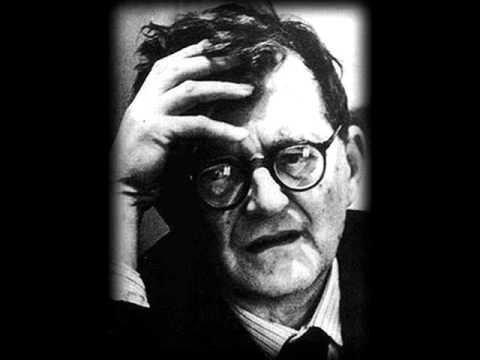
There is quite a bit of great music from the last 100 years capable of fulfilling all those requirements. But, thanks to last night’s remarkable performaance by Marc-André Hamelin and the Takács Quartet, I have Dmitri Shostakovich on the brain.
Here is a prime example of incredible intertwining of light and shadow, meditation and energy that is affecting yet completely non-specific programatically: Shostakovich’s final Op. 87 Prelude and Fugue, in D minor, recorded by the composer himself in 1952, the year he finished writing the set of 24:

John Terauds