
November 7, 2022
Protestors glued themselves to one of Francisco Goya’s paintings in Madrid’s Prado Museum and wrote “1.5 C” on the wall this weekend.
Here's what's happening in classical music right now:
- The big idea: New research questions our understanding of Tartini Tones
- Classical waves: This piano chord can cure pathological nightmares
- Classical 101: The surprising origin behind the expression "Break A Leg"
- Cartoon of the week
- Around the web: The English National Opera just lost all their funding, why so many babies are born at 8 am, an audience becomes the choir in Rome, plus more curious internet finds.
CLASSICAL CHARTS

THE BIG IDEA

Science Sleuths The Source Of Tartini Tones
In 1714, virtuoso violinist Giuseppe Tartini realized that when he played a double-stop that was perfectly in tune, he could hear a third tone. The soft third tone vibrates more quietly below the other two, and Tartini called them terzo suono.
In a 2018 article in The Strad, Associate Professor, Desautels Faculty of Music at the University of Manitoba describes the phenomenon in some detail, and according to a precise formula.
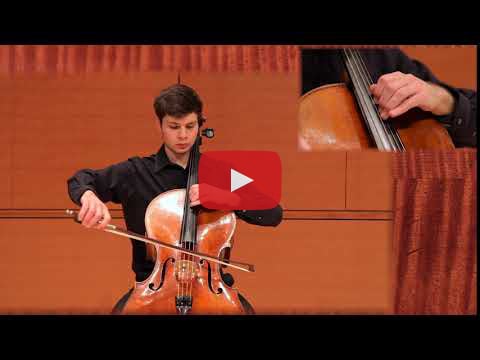
The third tone was once widely thought to be a simple quirk of hearing, or “a subjective phenomenon generated by the listener’s cochlear nonlinearity” as Italian researchers write in a 2010 paper. In other words, the sound is generated by a blend of the two notes as they resonate inside our own ears, and not by the instrument.
That paper goes on to detail experiments that demonstrate the generation of third tones — but, are they what Tartini heard?
One or two violinists played several dyads, and then each violin played one note of the dyad. Spectral analysis (essentially, calculation of the waves) was applied, and proved the existence of the so-called violin combination tones.
- Combination tones were found in all of the dyads;
- BUT — only when the dyad is played by one violin (not two).
That last finding is where doubt arises that what Tartini heard is, in fact, the same phenomenon. Tartini conducted his own experiments, and he wrote that he clearly heard third tones with both one and two violins.
Could it be the violin itself?
Perhaps the Tartini mystery lies in the instrument itself. Could the violins he used have made a difference?
A 2022 study by researchers at the University of Florence (Italy) looked at how different violins produced the combination tones. Published in The Journal of the Acoustical Society of America, the paper is titled Characteristics, mechanisms, and perceivability of combination tones in violins.
To analyze the sound, they compared the sounds generated by same two notes played by violinist Chiara Morandi on five different violins. They consisted of: a Tononi violin dating from 1700, an anonymous 18th-century Italian violin; a 19th-century violin by Henry Lockey Hill of London; a handcrafted violin dating from 1971; and a modern, factory-made instrument.
The experiment
The results were judged by 11 professional and amateur musicians, who listened to the tones as is, and with the combination tones digitally removed.
- They could hear the difference nearly every time;
- Even the least accurate of the listeners was correct 93% of the time.
When it came to the violins themselves, they found some interesting variations.
- All the violins produced a combination tone;
- The oldest violin produced the most audible combination tones;
- The difference in loudness between the 1700 Tononi and the modern factory-made instrument was about 75%.
Lead researcher Giovanni Cecchi is quoted in The Guardian. “The strongest one was found in an old Italian violin, made in Bologna in 1700 by the famous luthier Carlo Annibale Tononi,” he said. He emphasized, however, that quality and not age itself was the key issue. “Combination tones were negligibly small in violins of poor quality.”
Proving that the combination tones exist outside the ear is a significant step. Aside from Tartini and his observations, however, Cecchi noted that the combination tones affected the perception of the music by listeners.
The magic is in the instruments; it’s only now that science is starting to unravel the details.
THE LATEST
Breaking: English National Opera is to lose its £12.6 million core annual funding from Arts Council England as of 2023.
Opera: Christine Goerke awarded the Chevalier of L’ordre des arts et lettres.
Movers and shakers: BBC appoints first head of orchestras and choirs.
Competition: Canadian pianist triumphs with Chopin's Piano Concerto No.1 at Concours de Genève.
Education: First ever Artist Activist-in-Residence named at music school.
Violin: TwoSet Violin loaned two priceless Stradivari violins.
Lost and Found: Long-lost Stradivarius violin stolen by Nazis during Second World War found in France.
Interview: Mikhail Baryshnikov on his natural insecurity, his defection from the USSR to Canada – and how his body feels these days.
Long Read: A new biography of Suzuki Method founder argues that reducing it to a system of music instruction misses its underlying point about human potential.
CLASSICAL WAVES

Can A Piano Chord Cure Nightmares?
A new paper by researchers at the Université de Genève says yes.
The paper, published in the October issue of Current Biology, delves into therapies and protocols to help patients who experience pathological nightmares. Also called Nightmare Disorder or ND, patients have terrifying nightmares more than once a week, and it can cause a cascade of other issues from lack of sleep to anxiety and mood alteration.
Imagery Rehearsal Therapy (IRT)
Essentially, the therapy looks to help patients rewrite the script on frightening nightmares by rehearsing positive images and scenarios that they can insert into the dream.
- Patients practice imagining positive alternatives to nightmare situations, and typically repeat the process daily over two weeks;
- For this study, that was packed into one IRT session.
The problem: some patients don’t respond to the treatment.
IRT + Targeted Memory Reactivation (TMR)
For the new study, researchers combined IRT with another protocol called TMR or Targeted Memory Reactivation. TMR has been around since 2010, when a separate study discovered that people have the ability to train themselves to associate sounds with specific experiences, and that the effect still applies while sleeping.
- The participants were conditioned to associate a specific sound with a positive scenario;
- The sound was played during an IRT session — i.e. while they were imagining a situation associated with positive feelings, to combine both visual and audio stimuli;
- As they entered REM sleep (the stage most often associated with dreaming), the sound was played;
- The protocol was repeated for 14 nights.
”We asked the patients to imagine positive alternative scenarios to their nightmares. However, one of the two groups of patients did this exercise while a sound — a major piano chord — was played every ten seconds. The aim was for this sound to be associated with the imagined positive scenario. In this way, when the sound was then played again but now during sleep, it was more likely to reactivate a positive memory in dreams,” says Sophie Schwartz, a full professor in the Department of Basic Neurosciences at the UNIGE Faculty of Medicine and the Swiss Center for Affective Sciences, as quoted in Science Daily.
Participants wore a headband EEG device called Dreem that registered the stages of sleep, and delivered the sound every 10 seconds during REM sleep. A control group was played the same sound, but without prior conditioning (i.e. with IRT only and no TMR).
What sound did they choose? A C69 chord played on the piano, or C major with a major sixth and a major ninth.
Results
Thirty-six patients with ND participated in the study. As the researchers summarized, “Thanks to this new therapy, the patients’ nightmares decreased significantly, and their positive dreams increased.”
Both groups saw a decrease in nightmares. But, the group who’d associated the C69 chord with the positive dream scenario showed a significantly greater effect. The nightmares were reduced, and they actually began to experience more positive dreams.
- Before the study, the first group experienced an average of 2.58 nightmares per week, and the second group 2.94;
- At the end of the study, the first group (IRT only) were having 1.02 nightmares per week, and the second (IRT + TMR) only 0.19.
The group who went through both protocols also reported having more positive dreams. That effect was slightly diminished, but still noticeable, up to three months after the end of the study.
”While the results of the therapy coupling will need to be replicated before this method can be widely applied, there is every indication that it is a particularly effective new treatment for the nightmare disorder. The next step for us will be to test this method on nightmares linked to post-traumatic stress,” concludes Lampros Perogamvros, a privat-docent in the Department of Basic Neurosciences at the UNIGE Faculty of Medicine and a senior clinical fellow at the HUG’s Center for Sleep Medicine.
For musicians and music lovers, it’s only more proof of the strong links between music, memory, and emotions.
CLASSICAL 101

Why We Say "Break A Leg"
Have you ever wondered why people say “Break a leg” to performers before a performance?
While the origins of the phrase are murky, there are a number of theories on how this curious practice got started.
I hope your horse will break a leg
The first mention of “Break a leg” was recorded in print by Robert Wilson Lynd in 1921. An urbane literary essayist, he wrote an article, “A Defence of Superstition,” about the prevalence of superstition in the theatre and horse racing. He outlined that in horse racing, one would never wish someone good luck as it might push one’s luck too far. You would say, rather, “I hope your horse will break a leg.” This served as a kind of reverse psychological thought to appease the spirits of fate, which favoured the humble. He also mentioned that though Theatre was not as superstitious as horse racing, it was close.
I hope the principals break their legs
In 1939, the phrase again turned up in an autobiography by Edna Ferber, titled “A Peculiar Treasure”. She recounts tales of understudies sitting backstage hoping for principals to break their legs.
I hope you break a leg
Nearly a decade later, author Bernard Sobel wrote in his book, The Theatre Handbook and Digest of Play, that performance actors never wished each other good luck, and instead said, “I hope you break a leg“.
I hope you break your neck and legs
The use of the phrase has also been attributed to an old Yiddish phrase (הצלחה און ברכה) (“success and blessing“). It was later adapted in German as “Hans un beinbruch” or “Hals- und Beinbruch“, which translates as “breaking your neck and legs”. It was used by both English and German pilots in WWII as a way to wish pilots a good flight.
I hope you bend your leg
“Break a leg” may also allude to the practice of bowing or curtsying by performers during a curtain call. By placing the feet in front of each other and bending the knees, it breaks the line of the legs, hence the phrase, “break a leg”.
One more possible origin comes from a legendary performance of Shakespeare’s “Richard III”, starring 18th-century British actor David Garrick. The actor fractured his leg on stage and was so involved in the role that he didn’t even notice he had broken it.
Give me a break
In North America, Vaudeville has laid claim to “break a leg”, but in this case, it refers to the crossing of the legs of curtains found on traditional Renaissance stages. Companies would often overbook performers, and only those lucky enough to be chosen would ultimately be paid. They would wish each other luck by saying, “break a leg”, meaning, “I hope you get paid“.
Interestingly, “Break a Leg” has evolved beyond the stage world, and now includes the variants such as “give me a break“, “getting a break”, and “breaking into the business”.
Ballet dancers also have a version to “break a leg,” which is, shall we say, a little more “colourful”. Dancers blurt out “Merde!” before going out on stage as a way of disarming pre-performance jitters.
The devil’s influence
In Spanish, the phrase goes a step further with, “mucha mierda”, or “lots of excrement”.
The opera world prefers “Toi toi toi ” as the good luck charm of choice. It sometimes includes the practice of knocking on wood or spitting on the floor. The phrase roughly translates to “devil, devil, devil” — Teufel, pr. toi-fell) in German, and comes from “No’ kommt mer in’s Teu-Teu-Teufelskuchen bey ihm. Now we come into the De-De-Devil’s Kitchen! It may also be related to the practice of spitting three times to ward off bad luck.
Good luck
To wish a performer “good luck”, is ironically considered bad luck. It can also be construed as being somewhat pessimistic by indirectly implying the performer may not be competent enough to succeed with luck. “Good luck with that”.
Superstition
Psychologists have long been critical of the belief in external factors relating to performance. The risk of such beliefs is that it encourages performers to view events relying on competence and skill as outside of their control. Phycologists argue idioms may be tied to a performer’s sense of self-efficacy. In other words, expectations about the future are relative to past outcomes rather than competency.
Lucky underwear, lucky ties, lucky dresses. But whatever you do, just don’t say, “Good luck”.
AROUND THE WEB
📅 On this day: Igor Stravinsky’s Symphony in C premieres in 1940
🌿 Art: Artist builds a miniature greenhouse
👶 Interesting: A close look at human birth patterns: Why are so many babies born around 8 am?
😠 How to: Get over a perceived slight and get on with your day
🎤 Concert: Audience becomes the choir in Rome
CARTOON OF THE WEEK

Source: Source: Curnow/NPR
How did you like today's email?


Today's email was brought to you by Anya Wassenberg and Michael (Break-a-leg) Vincent.
CONTACT US


