No images? Click here

TOGETHER WITH

March 6, 2023
The US National Park Service has issued a tweet from their official account with some important advice. “If you come across a bear, never push a slower friend down … even if you feel the friendship has run its course.” Got that?
+++
In today’s email:
- The big idea: Why do people cough at concerts?
- Guide: Wayne Shorter, explained
- How a room impacts sound
- Listen up: Classical Nickelback is better than you’d think
- Meme of the week
- Around the web: La Scala makes history, Apple’s classical music app, and the holy grail of spices, plus more curious internet finds.
CLASSICAL CHARTS

THE BIG IDEA

Why Do People Cough at Concerts?
In a story that has become legend in the classical music world, Austrian pianist Alfred Brendel stopped a performance in Hamburg and snapped at the audience: "Either you stop coughing, or I stop playing!"
As the story goes, not one cough was heard after the pronouncement.
He's not the only classical performer who has complained about excessive coughing, naturally. In 2019, Yo-Yo Ma paused a recital of Bach Cello Suites in Mumbai to politely but purposefully ask any audience members who wanted to leave, to go. Some did actually exit at that point. He then led the audience in an exercise of collective throat-clearing and proceeded to complete the performance.
Did it work?
According to accounts, only for a little while. Gradually, the level and frequency of coughing ramped back up again.
Many other artists have made their feelings known on the subject, including Spanish classical guitarist Andrés Segovia, and Sir Simon Rattle, who told a 2007 Carnegie Hall audience, "This piece [Mahler's Ninth Symphony] starts with silence and returns to silence. The audience can help to create the piece by remaining silent."
The response to Brendel's admonishment may serve as some proof of the theory that coughing during classical music is a conscious act of something akin to subversion.
A Purposeful Breach of Etiquette
In 2012, German economist Andreas Wagener made waves with a paper titled Why Do People (Not) Cough in Concerts? : The Economics of Concert Etiquette, published in the Association for Cultural Economics International, Working Paper Series, 2012.
In it, he posited the notion that concertgoers cough on purpose. "The statistics indicate people cough during concerts twice as much as they do in normal life," he claimed in a BBC radio interview. At the time, the late professor Dr. Andreas Wagener taught at the Institute of Social Policy at Leibniz Universität in Hannover, Germany.
"Concert etiquette demands that audiences of classical concerts avoid inept noises such as coughs," the paper asserts. It also claims that, "coughing in concerts occurs more frequently than elsewhere, implying a widespread and intentional breach of concert etiquette."
His assertions are based on a statistical analysis of probabilities, but even so, he acknowledges that some coughing will occur. "Assuming that each person coughs purely randomly, independently of everybody else's coughing and at a time-invariant rate (homogeneous Poisson process), a normal frequency of 16 coughs per day corresponds to 0.0555 coughs in a five-minute interval. The likelihood that an individual will cough during a five-minute interval then is 1 – exp(- 0.05555) = 0.05404, and the probability that nobody in an audience of N people will cough during a five-minute interval equals (1 – 0.05404)N. For a small concert hall with N=200 people (the Golden Hall in Vienna's Musikverein or New York's Carnegie Hall seat well above 2,000 people), this amounts to 0.0015 percent, making the undisturbed performance even of a short piece of music extremely unlikely."
According to his numbers, the average concertgoer coughs 0.025 times a minute. That's about double the average overall. "If coughing were purely accidental, it should occur evenly distributed over the concert, which is not the case," he points out.
Coughing increases during slower, quieter movements;
It also ramps up during complicated passages or those unfamiliar to the audience.
He posits that coughing is a kind of passive-aggressive commentary on "uninteresting" sections of the performance or even an attention-seeking behaviour.

The Psychology of Coughing
It's about the psychology of the experience as a member of the audience at a concert involving classical music.
Unlike most pop music genres, the audience in a classical music concert is expected to give the music and its performance the entire floor, figuratively speaking. No dancing, no humming along. Certainly, no commentary or chatter during the performance. Silence and immobility (at least, insofar as movement of the audience is as unobtrusive as humanly possible), are the standard for audience behaviour.
It leaves coughing as virtually the only response possible.
The psychological underpinnings of coughing were discussed in Professor James W. Pennebaker's (University of Texas, Austin TX) seminal study Perceptual and Environmental Determinants of Coughing, published in Basic and Applied Social Psychology in 1980. According to his research, coughing is not only a physical response; it's a behaviour with social and psychological roots.
In essence, it's contagious
"Unlike health-seeking behaviours and self-reported physical sensations, coughing is typically an immediate and observable response to the perception of a scratchy or irritated throat. Several studies were conducted on coughing behaviour in naturalistic classroom settings."
The significant findings include:
The larger the group, the more coughs per person
People are more likely to cough if they hear others cough
The closer a person is to a cougher, the greater the probability that they will also emit a cough
Coughing varies as a function of external stimulus demands (i.e., when subjects viewed a movie that had previously been rated for its interest value every 30 seconds, subjects were more likely to cough during the uninteresting portions)
High instructor evaluations were related to fewer coughs during lectures. Perceptual, physiological, and depth of processing issues related to internal sensations arc discussed.
A Conclusion?
There are, of course, alternative interpretations of the coughing phenomenon. For example, during a pop music concert, it's possible to talk or respond, but the amplified music means that it generally involves shouting, and does not interfere with your neighbour's enjoyment of the music. Not so, when it comes to classical music and opera.
In a BBC radio show, concert pianist Susan Tomes talked about coughing during performances. "I certainly do notice it, but I think it has something to do with the fact that people have gotten so used to hearing music amplified," she said. "Many types of music are so loud, but classical music is not, and when you go to a classical concert, you forget how quiet acoustic instruments are."
Some concert venues in London have attempted to stem the intrusion of coughing by offering free cough drops in their foyers, a practice which is obviously not COVID-era safe.
Other times, a more drastic approach has been taken. During a 2019 performance of Donizetti's Lucia di Lammermoor at the Vienna Staatsoper, Olympic hockey star Samatha Quek was escorted out of her seat, and watched the rest of the performance from a screen in another room after a coughing fit.
Up till about the first half of the 19th century, concerts were generally an informal affair, and audience members wandered about, and vocalized their approval or disapproval of the performance. Demanding absolute silence from modern audiences may just be outside the realm of the possible.
"Substantial evidence suggests that coughing in concerts is excessive and non-random," concludes Wagener sternly in his paper, "[...] concert coughs, thus, must be regarded as wilful and voluntary to a substantial degree."


SPONSORED

Are you an aspiring composer?
The 2024 Azrieli Music Prizes (AMP) are now accepting submissions, and this year's focus is on Choral Music.
Don't miss your chance to showcase your musical talent and compete for one of four whopping $50,000 cash prizes.
AMP is Canada's largest music competition, celebrating excellence in composition and upholding Fair Access Principles. Regardless of your nationality, faith, age, gender, or experience level, you are invited to apply.
As a laureate of the AMP, you'll receive a gala concert premiere, two international showcases, and professional recordings of your prize-winning work. This is your chance to take your music to the next level and gain recognition from some of the world's most influential musical experts.
What's new this year?
The three existing Azrieli Music Prizes continue in this latest edition: The Azrieli Commission for Canadian Music, The Azrieli Commission for Jewish Music, and The Azrieli Prize for Jewish Music. A fourth prize has been added this year: the inaugural Azrieli Commission for International Music.
See your musical dreams come to life! Apply by May 5, 2023.
THE LATEST

Silvia Colasanti: Courtesy photo
La Scala makes history with first female commission. A new opera titled "Anne A." by composer Silvia Colasanti will be staged at Teatro alla Scala in 2025. The commission marks the first time in history that a female composer has been featured at La Scala. | Italy24
Apple set to release a classical music app very very soon. Apple has released its second beta of iOS 16.4 to developers, relieving code that indicates the tech giant is still hard at work on a classical music application. | MacRumors
Princess of Wales’ former piano teacher writes Coronation tune. Princess Diana's former piano teacher, Prudence Cuming, wrote a coronation song for schoolchildren. Originally written with a full orchestra in mind, it serves as an anthem of hope to mark a year of pandemic hardships. | The Telegraph
GUIDE

(Album cover: Wayne Shorter, Odyssey of Iska/1970)
Wayne Shorter, Explained
Wayne Shorter, the legendary saxophonist, composer, and bandleader, died on March 2, 2023, at 89.
He was one of his generation's most innovative and influential musicians, and his contributions to jazz music will be remembered for generations to come.
What made him so special?
Modal Jazz: Shorter was one of the primary architects of the "modal jazz" sound, which eschewed traditional chord progressions in favour of using modes, or scales, as the basis for improvisation.
Harmonic Complexity: Shorter's compositions and improvisations were characterized by their complex harmonies and unexpected chord changes.
Structural Experimentation: Shorter was also known for his structural experimentation, which included using unusual song forms, non-standard time signatures, and other unconventional approaches to composition and improvisation.
Jazz Fusion: In the 1970s, Shorter co-founded Weather Report, which helped pioneer the jazz fusion genre.
The Miles Davis and Art Blakey years
One of the most significant periods in Shorter's career was his Miles Davis period. He played on some of Davis's most iconic albums of the 1960s, including "E.S.P.," "Miles Smiles," and "Nefertiti."
Shorter's compositions, such as "Footprints" and "E.S.P.," became instant classics and are still widely performed and recorded today.
In the 1950s and '60s, Shorter also joined Art Blakey's Jazz Messengers, helping establish the group as one of the most important and influential ensembles in jazz history.
Contributions to classical music
While Shorter is primarily known for his contributions to jazz music, he has also written some classical music. One notable example is his "Concerto for Saxophone and Orchestra," which he composed in 1995 and premiered with the Detroit Symphony Orchestra in 1996.
Essential listening
Click here for a playlist of Shorter's most impactful music via Apple Music.
Bonus
Shorter originally started out as a clarinet player before switching to the saxophone.
He studied music at New York University and was a classmate of pianist Herbie Hancock.
Shorter's composition "Footprints" has been covered by countless jazz musicians and has become a jazz standard.
Shorter is also a visual artist and has exhibited his paintings and drawings in galleries worldwide.
Shorter and his wife Ana Maria provided Tina Turner with critical refuge at their home for six months after Turner left her abusive husband, Ike Turner, in 1976
DID YOU KNOW

How a Room Impacts Sound
Music is performed in many different spaces.
The significance is enormous…
…One church can make an organ sound deliciously soupy, while the same organ set in another church can sound thin and transparent. It all comes down to the complex interaction of natural reverb, early reflections and short delays.
To highlight the effect of acoustics on sound, French tenor Joachim Müllner has created a fascinating video recorded in 15 locations, including a church, gymnasium, oil field, living room, cellar and even an anechoic chamber.
The results are stunning, with each space framing his voice in different ways.

Key takeaways:
Size and shape: Large rooms tend to have longer reverberation times, meaning that sound can linger for longer. A room's shape can also affect how sound waves bounce around, creating areas of reinforcement and cancellation.
Surfaces: Soft materials like curtains or carpet can absorb sound, while hard surfaces like walls and floors can reflect sound. Irregular surfaces like bookshelves or furniture can scatter sound waves, creating a more diffuse sound.
Contents: Furniture, rugs, and other objects can absorb sound waves and reduce echo. Conversely, an empty room with few objects will tend to have more echo.
Location: A room located near a busy street or railway line will be subject to more external noise, while a room located away from sources of external noise will be quieter.
Acoustic treatment: Techniques such as adding sound-absorbing panels or diffusers can help to create a more balanced and controlled sound.
LISTEN UP

Classical Nickelback is better than you’d think
Nickelback, the Canadian rock band that everyone loves to hate, is being inducted into the Canadian Music Hall of Fame at this year's Juno Awards.
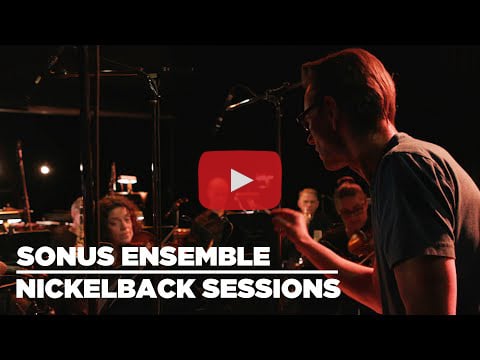
In honour, Sonus Ensemble and directed by Canadian composer and producer Kevin Fox have released a classical version of the band's hit song "Photograph".
What makes it good?
The results are surprisingly effective. Despite sounding nothing like a rock song, the original tune is still recognizable beneath the fanfare.
The ensemble features an English horn, clarinet, violin, flute, harp, timpani and eight other instruments that meld together to create a lush and layered journey.
What they’re saying
The arrangement was performed by the Sonus Ensemble and directed by Canadian composer and producer Kevin Fox. Fox said that arranging a rock song for a classical ensemble introduces a new set of emotions, and this version of "Photograph" is a sweeping and sentimental rendition that takes the original song to new emotional heights.
Meanwhile
There is no such thing as bad publicity…
The story about how Nickelback became the most hated band in the world is only now just being understood.

AROUND THE WEB
📅 On this day: Early modernist composer Zoltán Kodály dies in Budapest, Hungary, 1967.
🏴☠️ Amazing: Archaeologists just found the holy grail of spices on an ancient Baltic shipwreck.
💰Okay, wow: This Boeing employee bought a lottery ticket because it was at $747M, a nod to the aircraft. She won.
✈️ Good vibes: These inspiring 81-year-old women are on the adventure of a lifetime: Seeing the world in 80 days.
📚 Storytime: There’s a free online library of short stories that includes word counts and estimated reading times.
MEME OF THE WEEK

How did you like today's email?


Today's email was brought to you by Jennifer "ready, aim, fire" Liu and Michael "music is medicine" Vincent.
CONTACT US


